In the past, we used Venturi nozzles for vacuum generation. Compressed air consumption was extremely high. It was a total waste of energy. With the new vacuum system from Busch, we save 38,000 kWh per year.
Milking
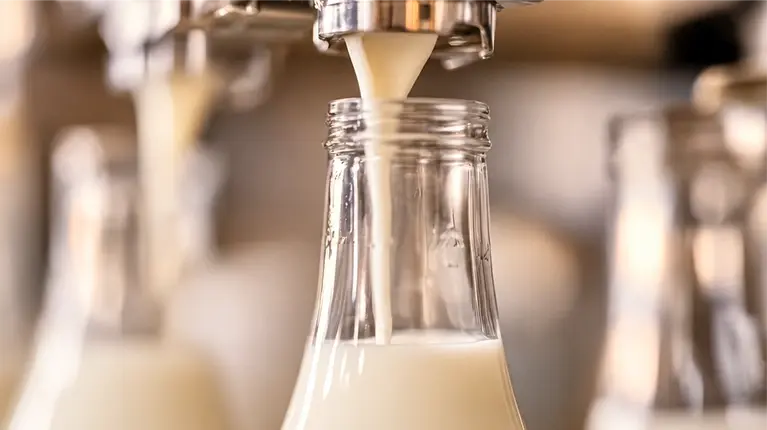
Different milking machines have different levels of complexity; however, the basic principle is the same: Cups of either plastic or stainless steel with a soft rubber liner are attached to a cow’s udder. Through these, gentle, constant vacuum is applied in a pulsation cycle that mimics the suckling of a calf.
A valve known as a pulsator opens and closes the liner. When the valve opens, the lining opens, and a vacuum is created inside the cup. This draws the milk from the teat and into the collection vessel. The pulsator then releases, closing the lining and restoring the cup to atmospheric pressure. The cycle then repeats.
Busch offers hygienic solutions for all sizes of dairy farm, from fully automatic milking systems to small milk parlors, to make their milking processes more efficient. MINK dry claw vacuum pumps are ideal for the dairy industry, thanks to their high reliability and dry operation. They are also practically maintenance free, ensuring higher production uptime. Alternatively, TYR rotary lobe blowers are perfect for milking due to their robust construction, high efficiency, and low noise levels.
Cheese production
For cheese production, the DOLPHIN liquid ring vacuum pumps and compressors are highly suitable. Their robust design allows them to handle moist air and cheese brine without risk of contamination, ensuring the integrity of the product during the maturation and packaging processes.
Pneumatic conveying of curd and whey
Pneumatic conveying of curds and whey ensures efficient, hygienic, and gentle transport of these dairy products. Using vacuum technology, curds and whey are safely moved through sealed pipelines. This minimizes their exposure to the oxygen in the atmosphere and preserves their product quality.
Cheese vacuum chambers
Vacuum technology plays a crucial role in various stages of cheese manufacturing, including cooling, degassing, molding, and dewatering. These processes take place in cheese vacuum chambers. The vacuum in these chambers is typically supplied with an R5 oil lubricated rotary vane or MINK dry claw vacuum pump.
Cooling
Vacuum cooling in cheese manufacturing is typically carried out immediately after the cheese has been formed and pressed. Heat develops during the curdling and pressing processes, where warm milk is inoculated with cultures and rennet. This causes curds to form, allowing the texture and flavor of the cheese to develop. Additional heat may also be applied to facilitate the separation of curds and whey. However, it is important to cool the cheese rapidly to prevent the growth of unwanted bacteria and to stabilize its form, making vacuum cooling the ideal method to quickly reduce its temperature. A vacuum pump lowers the pressure inside the chamber, causing the moisture within the cheese to evaporate rapidly. The vacuum pump continuously removes the vapor. This phase change from liquid to vapor requires heat, which is drawn from the cheese itself, effectively lowering its temperature.Degassing
During the degassing process, vacuum pumps are employed to remove gases trapped in the cheese curd. These gases consist of ambient air that has been incorporated during curd formation and fermentation gases produced by bacterial activity within the curd. The vacuum pump reduces the pressure in the chamber, causing these gases to expand and escape from the cheese. This step is vital to prevent the development of unwanted air pockets, which could affect the texture and appearance of the cheese. By extracting these gases, a dense and uniform cheese structure is achieved.Molding
The molding process also benefits from vacuum technology. Placing the curd in molds under vacuum ensures that the curd is evenly distributed and compacted, reducing the formation of holes or voids as well as ensuring a consistent shape and volume. This not only improves the appearance of the cheese but also helps it to mature evenly. A uniform taste and texture is therefore ensured throughout.Dewatering
In the dewatering phase, vacuum is used to extract whey from the curd, which intensifies the flavor and helps the cheese reach the desired firmness.Cheese towers
It’s not just a case of taste – each variety of cheese has its own distinctive texture. Cheeses like cheddar become crumbly when matured, a process that uses vacuum and the cheese’s own weight to increase its density. A tall, metal tower, known as a cheese tower, or cheddaring tower, is key in creating this distinctive texture. Dry, salted curds are suction conveyed to the top, are dropped in, and fall to the base. The weight of the curds presses the mass already at the bottom into a dense, cylindrical form. The tower is also kept under constant vacuum. This draws out residual whey and air. Moreover, it maintains a constant curd density. A DOLPHIN liquid ring vacuum pump, with its resistance to high-moisture environments, is the ideal solution for these processes. In certain cases, a MINK dry claw vacuum pump in combination with a separator can also be appropriate.
Vacuum packaging
Hard cheeses that are destined for the supermarket shelf are typically vacuum packaged. This helps preserve their freshness and flavor, as well prolonging their shelf life.
There are several different vacuum pump technologies that are suitable for packaging cheeses. The R5, our oil-lubricated rotary vane vacuum pump, is perfectly matched to the needs of the food industry. In certain cases, the COBRA dry screw vacuum pump is a good choice, while the MINK dry claw vacuum pump is especially suited for modified atmosphere packaging.
Butter production
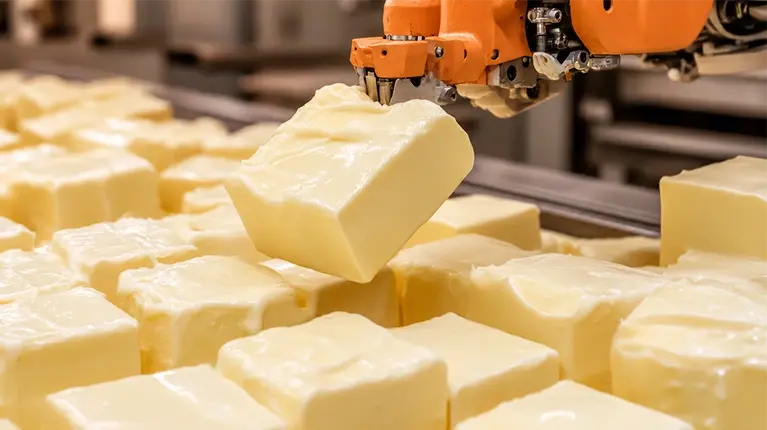
DOLPHIN vacuum pumps are the ideal partner in butter making processes. Their liquid ring technology makes them especially resistant to processes with a high moisture content.
Milk powder
Evaporation
In its natural state, cow’s milk is composed of approximately 87-91% water. Milk powder manufacturers gently remove the water content under the highest hygiene conditions, at the lowest possible cost. The milk is boiled until around 85% of the water is removed. This is extracted as a vapor, leaving behind a milk concentrate that can be further dried to create milk powder.
However, high temperatures can affect the nutritional value of the milk, as well as its flavor and color. To preserve these, evaporation is carried out under vacuum. Vacuum means that the milk boils at a lower temperature – a maximum of 72 °C. A DOLPHIN liquid ring vacuum pump is particularly suitable for this process, as it is extremely moisture resistant.
Powder handling
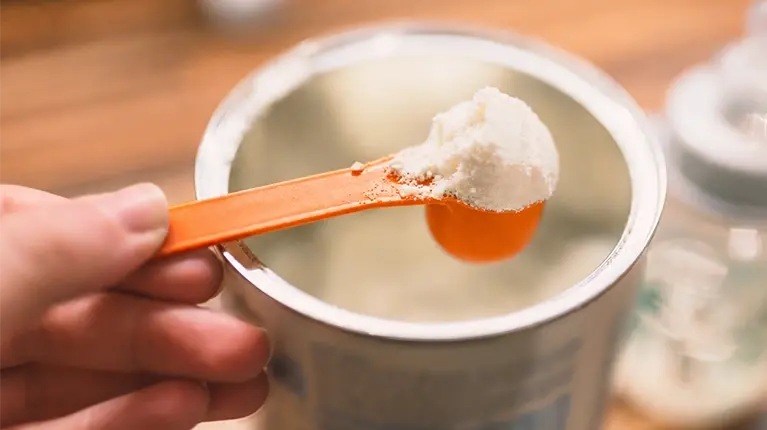
Overpressure or suction conveying systems are a common method of seamlessly transporting powdered milk through the production facility. These systems use a network of sealed tubes and either overpressure (overpressure conveying) to push the ingredients or vacuum (suction conveying) to suction the ingredients through. As powdered milk rapidly absorbs moisture from the air, this closed system helps preserve its quality. It also ensures that the highest hygiene standards are upheld by preventing contamination – important for any food product, but especially for products such as infant formula.
Vacuum Packaging
To ensure that the powder retains its quality inside the packaging, it is packed under vacuum. The milk powder is filled into a hopper, usually by a pneumatic conveying system. From here, it is transferred into the final packaging under vacuum. This ensures that no moisture or oxygen can enter the product.