Please update your browser.

It looks like you are using an old version of the Microsoft Edge browser. To get the best experience with the Busch website, please update your browser.

Contact Pump registration
Canada
bu_automotive_industries_stage

Vacuum Solutions for Automotive and Transport

From battery to brake lines – vacuum technology lies at the core of efficient automotive manufacturing.

The role of vacuum in automotive manufacturing

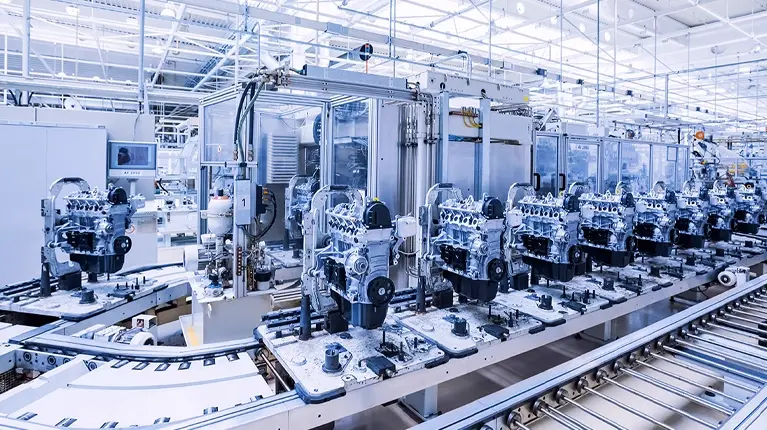
Modern transport – from cars, trucks and buses to trains, ships and aircrafts – relies on vacuum technology at nearly every manufacturing step. Casting lightweight components, drying and degassing materials, evacuating fluid lines, or testing components for leaks: all of these processes require stable and efficient vacuum. The industry faces challenges such as:

  • Ever shorter cycle times
  • Rising cost pressure
  • Strict regulations and compliance requirements
  • Safety-critical processes with zero tolerance for failure
  • Increasing automation and demand for seamless digital integration

Whether in battery and fuel cell production, heat treatment of components, or final assembly and quality control, vacuum technology enables manufacturers to achieve consistent quality, maximum throughput and compliance with global standards – addressing the challenges of modern automotive and transport industry.

Vacuum applications in automotive and transport

Vacuum technology supports a wide range of processes across the automotive and transport industry – from energy transition applications to core manufacturing and quality assurance. It enables reliable production of batteries, fuel cells, and lightweight components while ensuring efficient surface treatments and automated handling.

Across the entire value chain, vacuum ensures stable, efficient and compliant processes and helps manufacturers achieve higher precision, shorter cycle times, and full compliance with safety and quality standards. This versatility makes vacuum a key enabler for modern mobility and sustainable manufacturing.

Find the right vacuum solution for your application:

767x430px_batteryproduction

Battery production

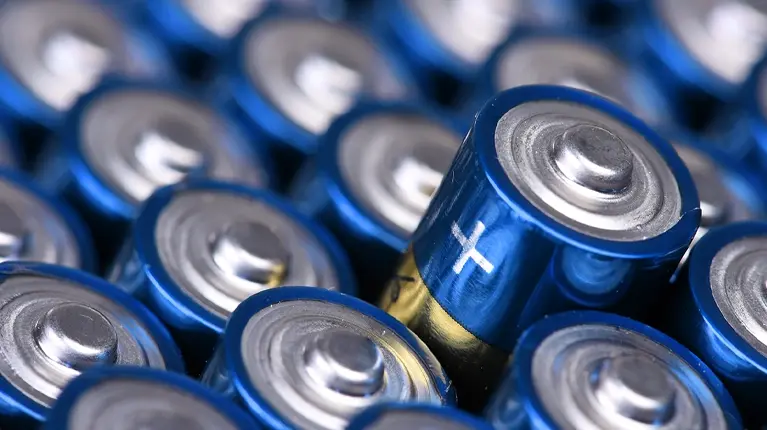
Lithium-ion batteries are central to electric vehicle (EV) performance. From slurry mixing and electrode drying to electrolyte filling, leak detection and end-of-life recycling, many steps in the manufacturing process rely on vacuum technology. These processes demand precision, efficiency and safety – in labs, pilot lines and large-scale production.

Busch provides a broad portfolio of vacuum pumps and systems with robust, energy-efficient designs, long service intervals and digital monitoring options to ensure reliable operation and optimized throughput. As the number of EVs continues to grow, vacuum systems also support safe, sustainable recycling by controlling reactive atmospheres, evaporating electrolytes and recovering valuable compounds.

Matching products
how_fuell_cell_work_mink_mh

Hydrogen and fuel cell industry

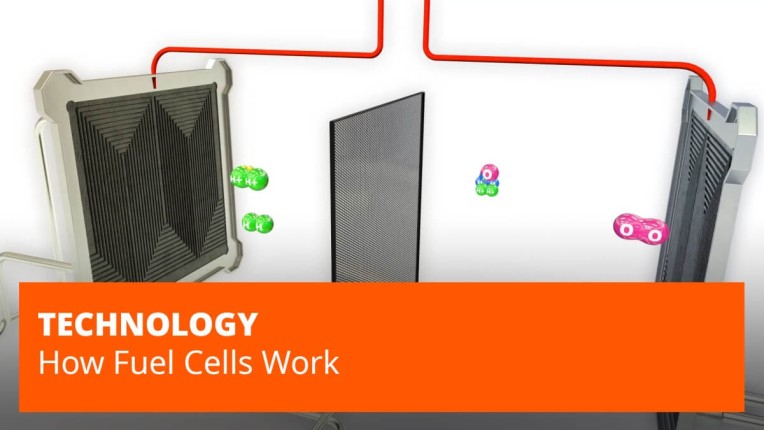
Hydrogen applications span the entire value chain – from production to storage and distribution to consumption in fuel cells – while facing strict safety, efficiency and reliability requirements.

In drying and purification, Busch recirculation blowers handle wet gases with ease and allow flexible operation. For storage and distribution, ATEX-certified vacuum pumps ensure safe tank filling and emptying, while scroll and turbomolecular vacuum pumps evacuate insulation spaces of double-wall tanks. In fuel cell systems, recirculation blowers return excess hydrogen within the stack to boost efficiency and reliability.

Matching products
767x430px_heattreatment

Heat treatment and vacuum furnaces

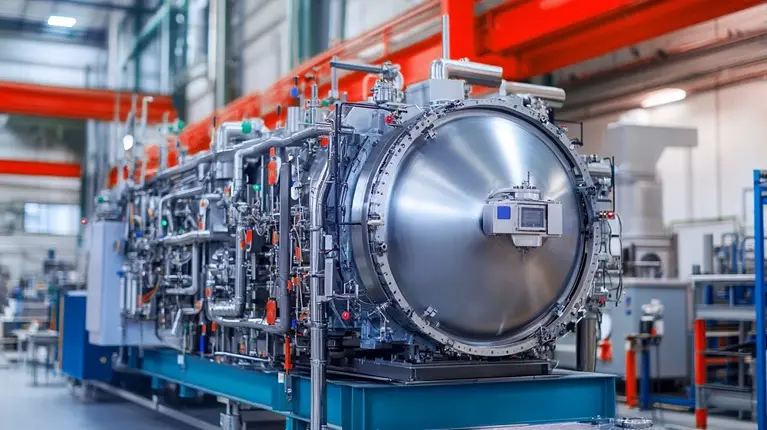
Heat treatment is a critical process in automotive manufacturing, enhancing the strength, durability, and performance of metal components. Vacuum furnaces provide a controlled, contaminant-free environment that ensures precise temperature management and uniform heating. Key challenges include generating a low-oxygen atmosphere to prevent oxidation, meeting diverse process requirements such as hardening, and achieving fast pump-down times while keeping operating costs low.

Busch delivers robust and reliable vacuum systems tailored to these demands. With dry and oil-lubricated vacuum pumps as well as vacuum boosters that combine high performance with energy efficiency and minimal maintenance, our solutions enable consistent, cost-effective and repeatable heat treatment for critical automotive parts.

Matching products
evacuation

Fluid evacuation and charging

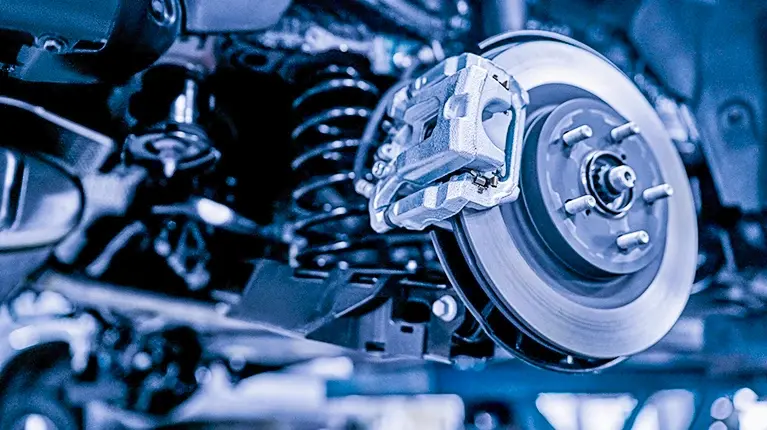
In automotive manufacturing, lines for brake, cooling or air conditioning systems must be evacuated before fluids are charged. Removing air and moisture is critical to prevent corrosion or malfunction, and the precise fluid quantity is essential for safe and efficient operation of refrigerants, lubricants and brake fluids. Handling toxic, flammable or corrosive substances adds further complexity, alongside the need for reliable integration into automated assembly lines.

Busch provides intelligent, ATEX-certified vacuum pumps that combine precision with long-term performance. With energy-efficient, low-maintenance technologies, our solutions ensure safe charging, reduced downtime and optimized cost of ownership.

Matching products
767x430px_pickandplace

Pick and Place

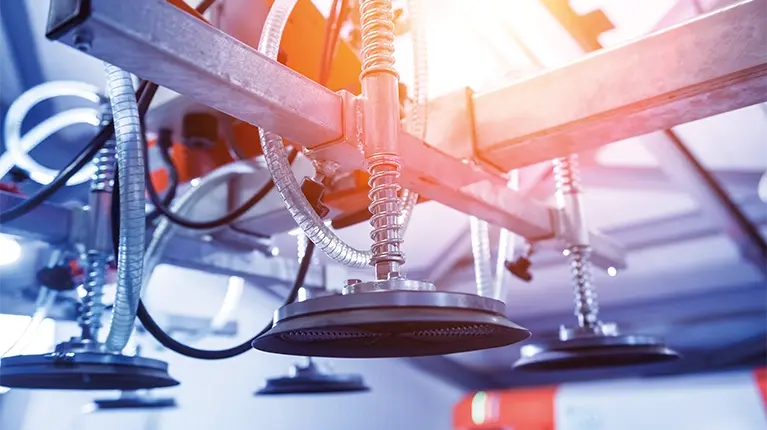
Handling of automotive components – from small precision parts to large assemblies – requires fast and reliable vacuum generation to keep up with very short production cycles. Systems must operate cost- and energy-efficiently, fit into restricted spaces, and comply with strict regulations on low noise levels.

Busch offers a range of dry claw vacuum pumps, rotary vane vacuum pumps, and rotary lobe blowers that deliver stable vacuum performance and long maintenance intervals. With adjustable vacuum levels and high process stability, our solutions ensure maximum productivity in automated handling and assembly processes.

Matching products

Covering the full spectrum of automotive and transport applications

The Busch Group combines the strengths of Busch Vacuum Solutions and Pfeiffer Vacuum+Fab Solutions to support the entire automotive and transport industry:

Additive manufacturing/3D printing

Stable vacuum conditions for additive manufacturing, ensuring quality and reproducibility of the parts.

Matching products

Electron beam welding

Ultra-clean vacuum environments for pore-free, durable welds in critical automotive components.

Matching products

Vacuum die casting

Efficient removal of gases in molds to create strong, lightweight aluminum or magnesium parts.

Matching products

Plastic, composites and vulcanization

Reliable vacuum processes for forming and treating plastics, composites and rubber in automotive manufacturing.

Matching products

Vacuum cleaning

Contaminant-free cleaning of sensitive components, ensuring performance and product quality.

Matching products

Vacuum sewage

Efficient removal and treatment of wastewater in transport systems such as trains or ships.

Matching products

Coating

Clean, stable vacuum processes for uniform functional and protective coatings.

Matching products

Flat panel display manufacturing

High vacuum environments for advanced display production of modern vehicles.

Matching products

Leak detection and end-of-line leak testing

Precise verification of component tightness for safety-critical systems such as batteries, tanks and HVAC-R units.

Matching products

Space research and simulation

Ultra-high vacuum conditions replicating orbital environments for validating advanced mobility technologies.

Matching products

Our solutions for the automotive and transport industry

Choose the optimal vacuum components for your automotive and transport application to ensure efficient operation. Busch offers a wide range of vacuum pumps suitable for this industry.
  • cobra_nx_0450_a

    Screw vacuum pumps

    Dry and efficient vacuum generation for demanding processes.

    Screw pumps
  • mink_mv_0312_b_1

    Claw vacuum pumps

    Oil-free, energy-efficient pumps ideal for continuous and clean operation.

    Claw pumps
  • r5_rd_0360_a

    Rotary vane vacuum pumps

    Robust and versatile solutions proven in industrial applications.

    Rotary vane pumps
  • panda_puma_1

    Vacuum boosters

    Powerful vacuum boosters for fast pump-down and high throughput.

    Vacuum boosters
  • dolphin_lx_0260_c

    Liquid ring vacuum pumps

    Durable pumps for handling wet gases and challenging conditions.

    Liquid ring pumps
  • combi_bn_cobra_nx_0450_a_panda_wv_2400_a

    Vacuum pump units

    Modular combinations of backing pumps and vacuum boosters for flexible performance.

    Vacuum pump units
  • rangu_df_1700_a_1

    Diffusion vacuum pumps

    High-vacuum generation with robust design.

    Diffusion pumps
  • samos_sb_0530_d0

    Rotary lobe and side channel blowers

    Robust rotary lobe and side channel blowers for efficient conveying of air and gases, from large-volume to compact low and medium vacuum applications.

    Rotary lobe and side channel blowers
  • seco_sv_1008_c_1

    Dry-running rotary vane vacuum pumps

    Compact, oil-free pumps for fast and clean vacuum generation.

    Dry-running rotary vane pumps

Unlock the full potential of your vacuum process

solution_stage_new2
with expert insights from Vacuum Diagnostics

Discover more

Efficiency and reliability at scale

767x430px_effieciency
Automotive production is shaped by high cost pressure, strict quality demands and the need for ever shorter cycle times. At the same time, assembly lines require technologies that integrate seamlessly into automated and digital environments. Any deviation – whether a leak, a delayed pump-down or unplanned downtime – directly impacts throughput and cost.

Busch vacuum solutions are designed to meet these challenges: energy-efficient and low-maintenance technologies reduce total cost-of-ownership, robust pump designs ensure reliable operation under demanding conditions, and monitoring with digital services helps prevent downtime before it occurs. In this way, Busch supports manufacturers in achieving cost efficiency, process stability and maximum productivity across the entire automotive value chain.

FAQ

Why is vacuum important for the transport and automotive industries?

Vacuum and overpressure technologies contribute to many areas of automotive manufacturing – from ensuring the safety of components through leak detection, to improving production efficiency in handling and lifting parts, and achieving a better finish in coating processes.

Which is the perfect vacuum pump for automotive applications?

There is no single perfect vacuum pump for all automotive applications – the ideal choice depends on the process requirements such as vacuum level, pumping speed, and maintenance needs. Busch Vacuum Solutions offers several innovative technologies designed specifically for automotive manufacturing:

  • MINK dry claw vacuum pumps – oil-free, energy-efficient, and low-maintenance. Perfect for applications requiring clean, dry vacuum such as Pick and Place applications or vacuum cleaning.
  • COBRA dry screw vacuum pumps – deliver high vacuum levels with completely dry operation, making them ideal for component testing, battery manufacturing, and other sensitive processes.
  • R5 rotary vane vacuum pumps – robust and proven in countless demanding applications. With their reliable performance and adaptability, they are particularly suited for processes like fluid evacuation and charging, where stable vacuum and durability are critical.
By matching the right Busch vacuum pump to your process, you ensure maximum efficiency, reliability, and product quality in automotive production.

Find your matching product

How can I achieve energy savings in automotive vacuum applications?

Energy efficiency starts with demand-based vacuum generation – producing only as much vacuum as the process requires. With solutions like ECOTORQUE, the variable speed drive and intelligent control systems from Busch, vacuum pumps automatically adapt to fluctuating demand. This not only reduces energy consumption and costs, but also lowers operating expenses and extends equipment lifetime. Combined with our energy-efficiency services and monitoring tools, manufacturers can optimize vacuum supply across the entire automotive production line.

How can I monitor and optimize vacuum systems in automotive production?

Busch offers OO – Digital Services, an IoT-based platform that lets you track, analyze, and optimize your vacuum systems in real time. With 24/7 remote monitoring, predictivemaintenance alerts, and energy consumption insights, you can reduce downtime, improve efficiency, and ensure process reliability in critical applications across the entire range of applications in this industry.

How is vacuum used in hydrogen recirculation systems?

To ensure safe and efficient operation of hydrogen fuel cells, excess hydrogen is recirculated within the cell to prevent oxygen ingress and reduce hydrogen consumption.

High-performance vacuum blowers – like the TÜV-certified MINK MH 0018 A from Busch – enable this process by recirculating between 20 and 70% of the hydrogen flow, maintaining the internal hydrogen loop and improving overall fuel efficiency.

What role does vacuum play in bipolar plate manufacturing?

Bipolar plates connect the individual cells within a fuel cell stack and must be highly conductive and corrosion-resistant. Vacuum-assisted coating processes such as plasma activation and sputtering apply protective layers that enhance electrical conductivity and extend the lifespan of the plates – directly supporting fuel cell reliability in automotive applications.

How does vacuum technology enable sustainable, modern transport and support the future of e-mobility?

Vacuum technology plays an essential role in advancinggreen, sustainable transport. It enables the production of reliable battery and hydrogen fuel cells, supports lightweight component manufacturing, ensures high-quality surface coatings, and contributes to efficient recycling. These processes reduce emissions, conserve resources, and improve vehicle performance and lifetime.

With energy-efficient vacuum pump designs and digital services, Busch provides solutions that make sustainable mobility scalable and cost-effective. By driving innovations in electric mobility and hydrogen applications, vacuum systems actively shape the future of transport.

What types of electric mobility are there?

The term electric mobility, or e-mobility, comprises vehicles of all sizes that are driven by an electric motor. The market has evolved to include nearly all types of vehicles, from motorcycles to buses, as well as all sizes of cars.

A true electric vehicle operates solely on batteries, without an internal combustion engine. However, the term also includes hybrid electric vehicles, which run with a combination of both, allowing for a smaller motor and a reduced carbon footprint compared to a traditional combustion engine.

Hydrogen vehicles are also a form of e-mobility, which uses the electricity generated by hydrogen fuel cells to power the motor, as well as charge the car’s battery.

Hydrogen fuel cells vs. electric vehicles battery – which is best?

Neither technology is universally “better” – each has advantages depending on the application. Battery electric vehicles (BEVs) are currently more widespread and efficient for short to medium distances, benefiting from an extensive charging infrastructure. They are well-suited for passenger cars in urban environments.

Hydrogen fuel cell vehicles (FCEVs), on the other hand, offer faster refueling times and longer ranges, making them ideal for long-haul transport, buses, and heavy-duty applications. They also perform better in cold conditions.

Both technologies contribute to the transition to green transport. Busch supports fuel cell development and lithium-ion battery manufacturing with advanced vacuum solutions for processes like degassing, drying, leak testing, and hydrogen recirculation.