

Genuine exhaust filters balance low back pressure and effective oil mist separation.Source: Busch Group.
Non-Genuine Spare Parts and Oils: The Hidden Costs to Vacuum Pump Efficiency
In vacuum technology, precision and reliability are critical. Whatever the application, vacuum equipment must always provide the same level of performance in order to produce consistent results. Non-genuine components may look the same as genuine parts, but their inconsistent quality can reduce efficiency, compromise reliability, and increase total cost-of-ownership. This article explains how genuine spare parts and oil preserve vacuum pump efficiency, reliability and performance, and outlines the risks of substandard substitutes.
Why genuine spare parts protect performance and preserve efficiency
Each component plays a role in ensuring a vacuum pump performs at its best. When just one component is substandard, it can compromise the operation of the whole vacuum pump. Between genuine and non-genuine spare parts, there are often small differences in materials used and the tolerances they are manufactured to. Below are examples of typical vacuum pump components and the impact of using a non-genuine replacement for each.Vanes
Vanes in an oil-lubricated rotary vane vacuum pump endure friction, rapid movement and temperature variations. Genuine vanes are manufactured for hardness, wear resistance and thermal stability, ensuring that they maintain their sealing properties over time. Non-genuine, low-grade vanes can wear early, warp and lose their sealing ability. This is because they are often made from inferior materials or produced with inadequate precision, leading to uneven expansion and accelerated wear under operating conditions. This reduces compression efficiency, increases power consumption, raises noise and vibration, and can even create markings on the cylinder wall.
-
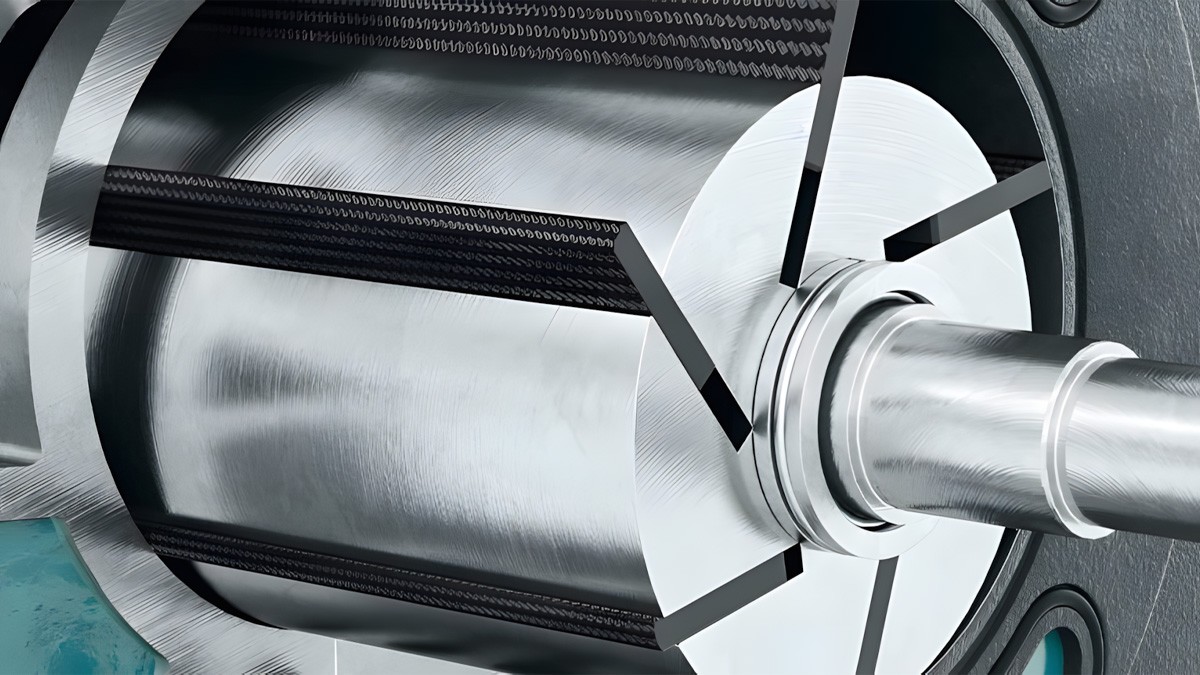
Vanes and rotor must maintain precise sealing to ensure compression efficiency. Source: Busch Group.

-
test
Vanes and rotor must maintain precise sealing to ensure compression efficiency. Source: Busch Group.
Oil
Depending on the vacuum pump technology, oil can have several important functions. In oil-lubricated rotary vane vacuum pumps, it lubricates internal components such as sliding vanes, it cools by moving heat away from moving parts, and it seals where vanes meet the cylinder wall to ensure maximum compression efficiency. Even dry vacuum pump models require oil to lubricate the gearbox in order to reduce wear, vibration, and noise.
Substandard oils can break down faster, form sludge and provide inadequate lubrication, raising friction on key components. This leads to internal wear, increased energy consumption and compromised vacuum performance. Only genuine oils have been tested and qualified for use in vacuum pumps, ensuring safe and reliable operation.
Depending on the vacuum pump technology, oil can have several important functions. In oil-lubricated rotary vane vacuum pumps, it lubricates internal components such as sliding vanes, it cools by moving heat away from moving parts, and it seals where vanes meet the cylinder wall to ensure maximum compression efficiency. Even dry vacuum pump models require oil to lubricate the gearbox in order to reduce wear, vibration, and noise.
Substandard oils can break down faster, form sludge and provide inadequate lubrication, raising friction on key components. This leads to internal wear, increased energy consumption and compromised vacuum performance. Only genuine oils have been tested and qualified for use in vacuum pumps, ensuring safe and reliable operation.
-
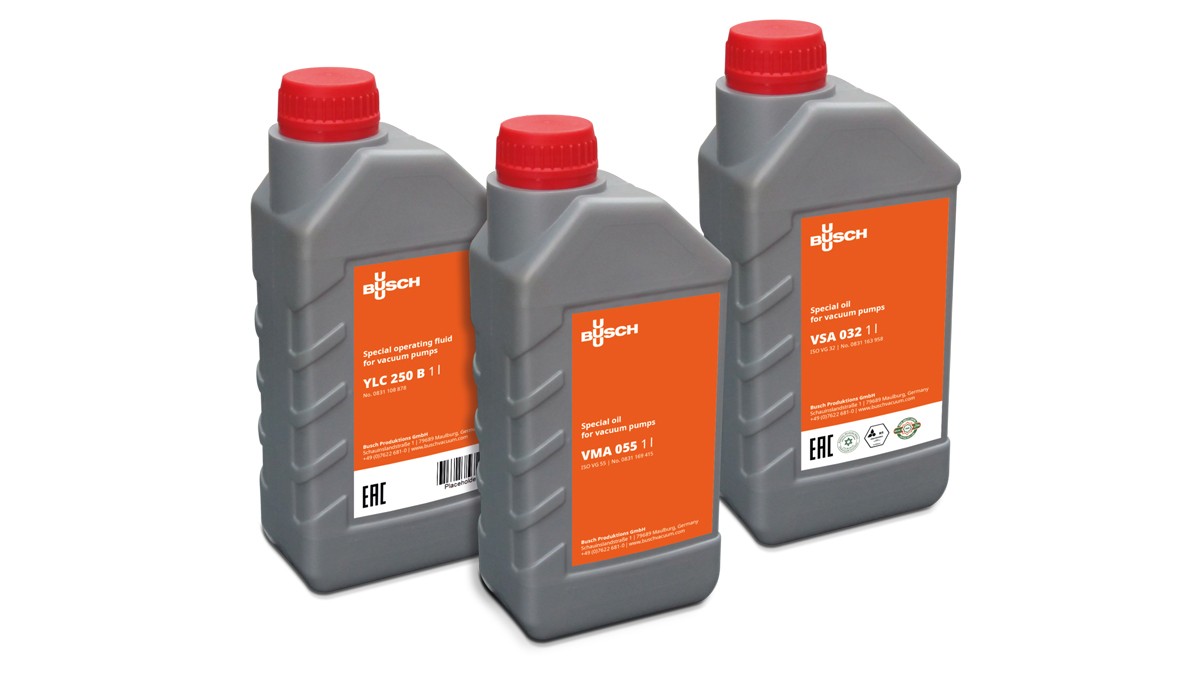
Using the right oil maintains lubrication, sealing, and heat transfer. Source: Busch Group.

-
test
Using the right oil maintains lubrication, sealing, and heat transfer. Source: Busch Group.
Coatings
Dry screw and dry claw vacuum pumps rely on tight clearances and engineered surface coatings. Genuine coated spare parts are built with precise tolerances, reduce friction, resist wear and withstand chemical exposure. Non-genuine coatings may compromise the precise tolerances inside a vacuum pump. Inferior coatings often wear quickly, leaving metal surfaces vulnerable to abrasion and chemical attack. In either event, these would raise clearances, reduce compression efficiency and could even result in a vacuum pump seizing.
Exhaust filters
A genuine exhaust filter allows gas to pass through freely while efficiently trapping oil mist. Genuine filters balance low back pressure with high filtration capacity. Non-genuine filters can clog faster, creating excessive back pressure and forcing the vacuum pump to work harder. This increases the motor load, power consumption, heat, and wear on other components. Poor-quality filters may also allow oil mist to escape into the surrounding air, resulting in potential contamination, environmental damage and an unhealthy workplace.
Dry screw and dry claw vacuum pumps rely on tight clearances and engineered surface coatings. Genuine coated spare parts are built with precise tolerances, reduce friction, resist wear and withstand chemical exposure. Non-genuine coatings may compromise the precise tolerances inside a vacuum pump. Inferior coatings often wear quickly, leaving metal surfaces vulnerable to abrasion and chemical attack. In either event, these would raise clearances, reduce compression efficiency and could even result in a vacuum pump seizing.
Exhaust filters
A genuine exhaust filter allows gas to pass through freely while efficiently trapping oil mist. Genuine filters balance low back pressure with high filtration capacity. Non-genuine filters can clog faster, creating excessive back pressure and forcing the vacuum pump to work harder. This increases the motor load, power consumption, heat, and wear on other components. Poor-quality filters may also allow oil mist to escape into the surrounding air, resulting in potential contamination, environmental damage and an unhealthy workplace.
-
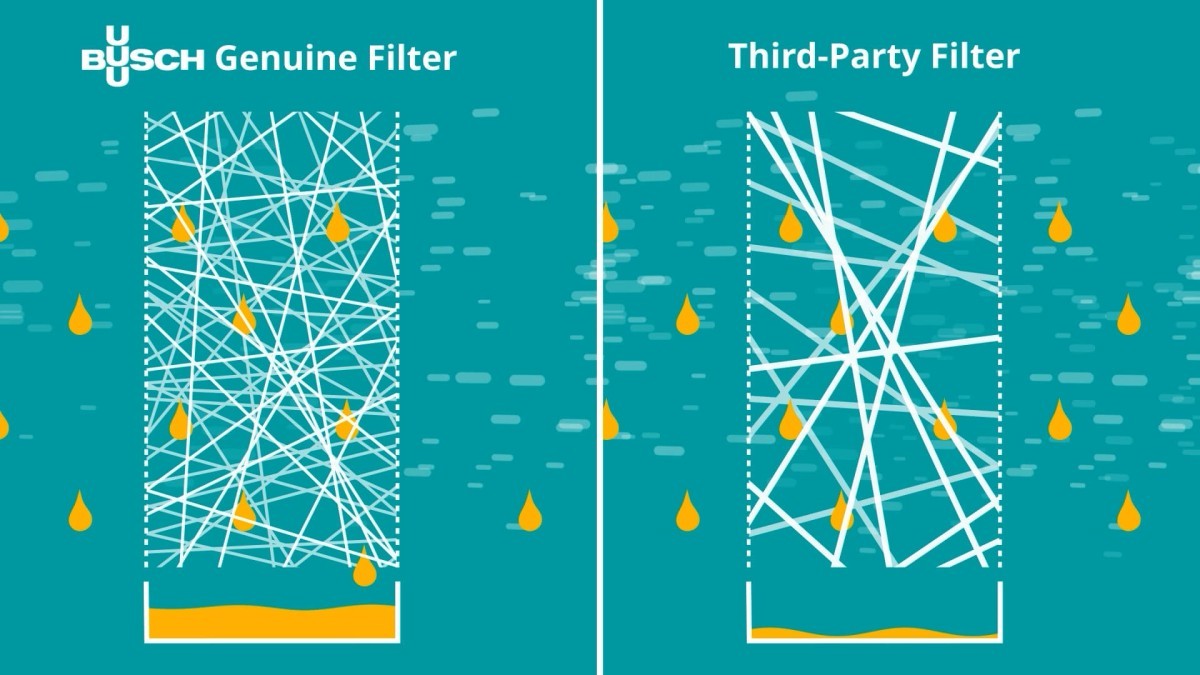
Efficient filtration captures oil mist without increasing back pressure. Source: Busch Group.

-
test
Efficient filtration captures oil mist without increasing back pressure. Source: Busch Group.
The hidden costs of non-genuine spare parts
The effects of non-genuine components are often not immediately visible at the level of individual parts. Instead, they tend to show up in the overall performance of the vacuum pump. In practice, this means that reduced efficiency, performance issues, or reliability problems often appear as operational symptoms rather than immediately identifiable root causes. The following examples highlight common warning signs and their underlying connection to the use of non-genuine spare parts and oil:- Increased energy consumption: Small efficiency losses due to non-genuine spare parts mean more energy is consumed to maintain the same vacuum level. Energy consumption may increase slowly and go unnoticed for months but can significantly impact operating costs — especially for plants with multiple vacuum pumps.
- Reduced mean time between failure (MTBF): Counterfeit parts may wear faster and fail sooner, leading to costly breakdowns.
- Increased downtime risk: Accelerated wear and unforeseen failures as a result of using non-genuine spares cause unplanned downtime, resulting in lost output.
- Cascading component damage: One substandard part can increase stress on others. For example, a clogged exhaust filter in an oil-lubricated rotary vane vacuum pump raises back pressure, which increases compression and internal temperatures, adding stress to seals and vanes, among other components.
- Increased maintenance: Low-quality oils degrade faster and need more frequent replacement.
- Voided manufacturer warranty: Using non-genuine spare parts voids the warranty of the vacuum pump. If a major failure occurs, even unrelated to the part in question, manufacturers are likely unable to cover the repair or replacement due to the knock-on effect one part can have on another.
- Higher oil consumption: Low-quality exhaust filters are less efficient at removing oil mist, leading to oil mist emissions and more frequent oil top-ups. These emissions may also cause additional concerns, such as for worker safety and the wider environment.
- Increased vibration and noise: Non-genuine spare parts often lack the correct dimensional tolerances or material quality. This can cause an imbalance or misalignment in the vacuum pump, leading to excessive vibration, accelerating wear on other components. Non-genuine spare parts can also result in increased noise levels, making the working environment surrounding the vacuum pump less pleasant.