
Please update your browser.

It looks like you are using an old version of the Microsoft Edge browser. To get the best experience with the Busch website, please update your browser.

Contact Customer portal
Thailand
con23_1458_updateimages_dairy_stage_1920x720px_150dpi_rgb_ll

Vacuum in the Dairy Industry

Reliable and energy-efficient solutions for productive, hygienic and resource-efficient dairy processes.

Contact us

Productive dairy processes start with the right vacuum solution

Vacuum pumps and systems play an important role throughout the dairy industry - from milking and cheese production to milk powder evaporation, handling as well as packaging.
Helping dairy producers improve efficiency, reduce costs and maximize uptime through expertise, digital services and global support.


The right reliable vacuum technology helps dairy producers increase productivity, improve process reliability and reduce energy, water and maintenance costs. At the same time, controlled vacuum conditions support high hygiene standards, product safety and consistent quality.


Busch Group provides robust and efficient vacuum and overpressure solutions for individual process steps as well as centralized systems that support reliable operation across dairy production lines.
In the past, we used Venturi nozzles for vacuum generation. Compressed air consumption was extremely high. It was a total waste of energy. With the new vacuum system from Busch, we save 38,000 kWh* per year.
Josef Vögele, General Manager, Milchwerk Crailsheim-Dinkelsbühl
* That is roughly equivalent to the annual electricity consumption of 10 to 15 households.

Our solutions for dairy processes

The Busch Group, with its trusted brands Busch and Pfeiffer Vacuum+Fab Solutions, offers vacuum, overpressure and leak detection technologies for the different requirements of dairy production – from individual vacuum pumps to customized central vacuum systems.

Our vacuum specialists help dairy producers select the right technology for reliable performance, lower operating costs and sustainable production.

Compare matching products
  • MINK MM 1104 CVM dry claw vacuum pump from Busch Vacuum Solutions

    Claw vacuum pumps

    Robust, dry-running pumps for hygienic operation and reduced energy consumption.

    Claw pumps
  • DOLPHIN LA 0224 A liquid ring vacuum pump from Busch Vacuum Solutions

    Liquid ring vacuum pumps

    Reliably handle moisture and high vapor loads in humid dairy processes, with CIP (Clean-in-place) options for easier cleaning.

    Liquid ring pumps
  • R5 RA 0520 A rotary vane vacuum pump from Busch Vacuum Solutions

    Rotary vane vacuum pumps

    Reliable vacuum solution dedicated for packaging and cheese production applications.

    Rotary vane pumps
  • COBRA NF 0750 A dry screw vacuum pump from Busch Vacuum Solutions

    Screw vacuum pumps

    Dry vacuum generation with minimized maintenance effort, high energy efficiency and extended vacuum performance.

    Screw pumps
  • TYR WT 0730 AP PLUS rotary lobe blower from Busch Vacuum Solutions

    Rotary lobe blowers

    High-volume air flow for milking and conveying applications.

    Rotary lobe blowers
  • SAMOS SI 1500 E1 side channel blower from Busch Vacuum Solutions

    Side channel blower

    Stable, pulsation-free vacuum or overpressure for clean conveying and handling processes.

    Side channel blowers
  • con23_1458_updateimages_dairy_vacuumsystem_7670x510px_150dpi_rgb_ll

    Central vacuum systems

    Centralized vacuum supply optimized for process reliability, energy efficiency and productivity.

    Central vacuum systems
  • STF 0250 standing filter from Busch Vacuum Solutions

    Filtration, separators and condensers

    Protect vacuum equipment from liquids, solids and process vapors.

    Filtration, separators and condensers
  • ami1000_11593

    Leak detection solutions

    Verifying packaging integrity and support for food safety and quality control.

    Leak detection solutions

Vacuum applications in the dairy industry

Vacuum supports a wide range of dairy processes, ensuring stable processes for an efficient production, hygienic handling, and consistent product quality.

Each process has its own requirements for the vacuum level, capacity, moisture tolerance, hygiene and process control. Selecting the right vacuum technology is therefore essential for reliable and resource-efficient dairy production.
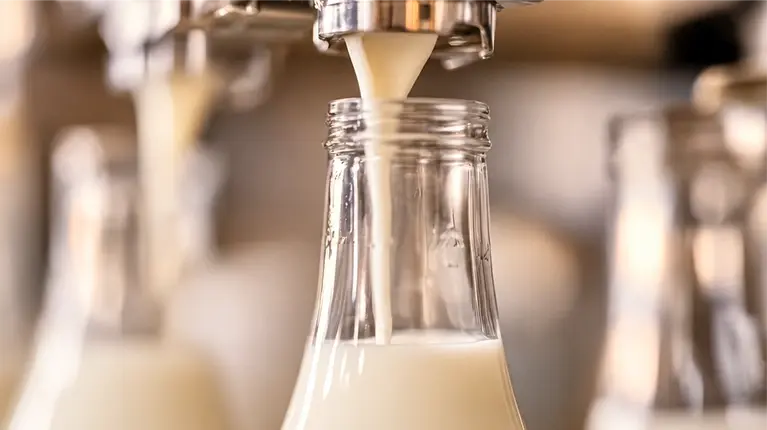
Milk bottles

Milking

Dairy farms need a stable and reliable vacuum supply to ensure efficient milking performance, high uptime and consistent milk flow. At the same time, they face increasing pressure to reduce energy and water use, meet hygiene requirements and keep maintenance effort low.

Busch Group offers robust vacuum solutions for different milking solutions, from mobile milking machines and parlors to carousel and automatic milking systems.

Depending on the requirements, dry claw pumps, oil-lubricated rotary vane vacuum pumps, liquid ring vacuum pumps, rotary lobe blowers or central vacuum systems can support reliable operation, low noise levels and reduced operating costs.

Matching products
con23_1458_updateimages_dairy_cheeseproduction_7670x430px_150dpi_rgb_ll

Cheese production

Vacuum and overpressure support efficient, hygienic and consistent cheese production across multiple process steps, including pneumatic conveying, vacuum chambers, cheese towers and packaging.

Stable vacuum conditions help control air, gases and moisture in the process. This supports consistent texture, shape and quality while helping reduce processing time, product loss and production interruptions.

Matching products

Pneumatic conveying of curd and whey

Curd and whey must be transported hygienically and reliably while avoiding contamination, blockages and product damage. Continuous flow is essential to keep production stable and efficient.

Vacuum and overpressure technologies enable closed, controlled conveying through pipelines.

Dry claw vacuum pumps, liquid ring vacuum pumps and rotary lobe blowers provide stable air flow for gentle product transfer, while filtration systems help protect the vacuum equipment from particles, liquids and residues.

Cheese vacuum chambers

Cheese vacuum chambers require precise vacuum control for degassing, molding, cooling and dewatering. Key challenges include removing entrapped gases, achieving uniform texture and shape, and extracting whey efficiently.

Controlled vacuum removes air and gases, helps distribute and consolidate the curd evenly and supports to achieve the desired moisture level, firmness and texture.

Liquid ring vacuum pumps, dry claw vacuum pumps and oil-lubricated rotary vane vacuum pumps provide reliable performance, while suitable filtration protects the equipment from liquids and process residues.


Cooling

Vacuum lowers the boiling point of moisture in the cheese. The resulting evaporation removes heat from the product surface, enabling rapid and gentle cooling after forming and pressing. This stabilizes the product and helps limit unwanted bacterial growth.


Degassing

Vacuum degassing removes trapped air and fermentation gases from the curd. This prevents unwanted air pockets and creates a denser, more uniform cheese structure.


Molding

Under vacuum, the curd is evenly distributed and compacted inside the mold. This reduces holes and voids and supports a consistent shape, texture and maturation process.


Dewatering

Vacuum helps extract residual whey from the curd, supporting the desired moisture level, firmness and flavor.

Cheese towers

Cheese towers, also known as cheddaring towers, require constant vacuum, reliable moisture handling and continuous operation. Residual air and whey must be removed effectively while maintaining uniform curd density and consistent product quality throughout the tower.

Stable vacuum supports consistent curd density, reliable whey removal and uniform product quality.

Liquid ring vacuum pumps, dry claw vacuum pumps and oil-lubricated rotary vane vacuum pumps provide robust vacuum generation for continuous operation, including demanding moisture conditions.

Vacuum packaging for cheese

Cheese packaging must protect freshness, flavor and texture while extending shelf life and reducing spoilage. High-throughput packaging lines also require reliable vacuum cycles and consistent packaging quality.

Vacuum packaging removes air and oxygen from the package to help protect product quality and shelf life.

Oil-lubricated rotary vane, dry screw and claw vacuum pumps support reliable packaging processes, while vacuum boosters help shorten evacuation times in high-throughput lines. Modified Atmosphere Packaging (MAP) can provide additional protection for sensitive cheese products such as hard cheese.

Pick & Place for cheese products

Cheese products must be transferred quickly, gently and hygienically between cutting, processing, packaging and end-of-line handling steps. Vacuum grippers can be used to pick cheese blocks, load and unload cutting lines, place slices into thermoformed packs and handle packaged cheese products.

After packaging, Pick & Place systems can place products into cartons or trays and prepare them for palletizing.

Dry claw vacuum pumps and side channel blowers provide the stable vacuum supply required for fast, precise and repeatable handling.

con23_1458_updateimages_dairy_butterproduction_7670x430px_150dpi_rgb_ll

Butter production

Butter production requires reliable removal of trapped air and excess oxygen after churning. Key challenges include preventing oxidation, maintaining a consistent structure, color and flavor, and ensuring stable performance in high-moisture process conditions.

Vacuum degassing gently removes air and oxygen from the butter mass, helping protect product quality and shelf life.

Liquid ring vacuum pumps and oil-lubricated rotary vane vacuum pumps provide robust vacuum performance for moist process conditions and continuous butter production.

Matching products

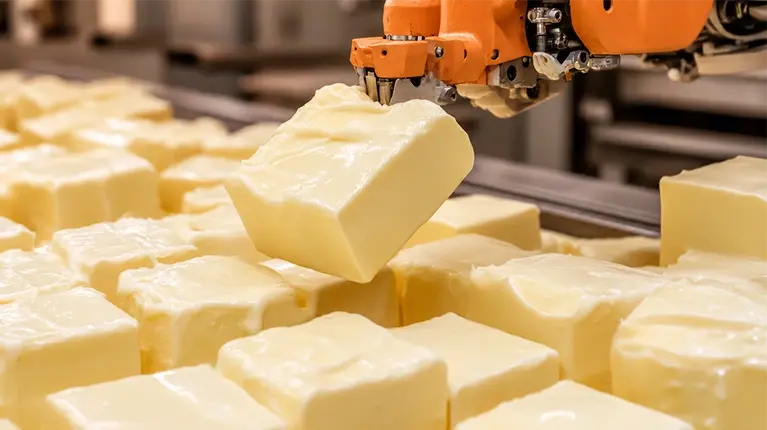
Pick & Place for butter products

After packaging, vacuum grippers can be used to transfer butter packs into cartons or trays and prepare them for palletizing. Gentle, reliable handling helps prevent product damage while supporting hygienic, automated end-of-line processes.

Dry claw vacuum pumps and side channel blowers provide stable vacuum for fast and repeatable Pick & Place operations.

con23_1458_updateimages_dairy_milkpowder_7670x430px_150dpi_rgb_ll

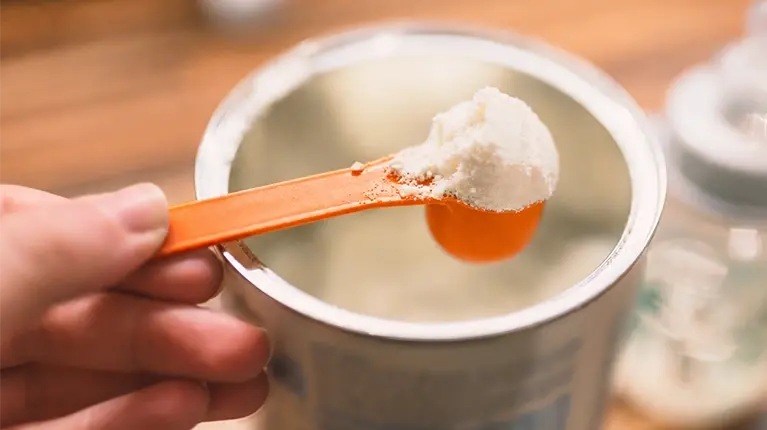
Milk powder

Milk powder production requires gentle drying through evaporation, hygienic powder handling and reliable packaging to protect sensitive products such as infant formula, coffee creamer and nutritional powders.

Vacuum and overpressure technologies support efficient evaporation, hygienic powder conveying and protective packaging. This helps preserve nutritional value, flavor and product quality while reducing exposure to moisture, oxygen and contamination.

Matching products

Evaporation

Milk powder production requires gentle water removal while maintaining product quality, flavor, color and nutritional value. High vapor loads, moisture and continuous operation place demanding requirements on the vacuum equipment. Vacuum lowers the boiling temperature, thus, evaporation can be performed at lower temperatures.

Liquid ring vacuum pumps, oil-lubricated rotary vane vacuum pumps and vacuum boosters provide robust performance for moisture-rich processes and high vapor loads.

Powder handling

Milk powder must be transported hygienically and reliably while avoiding contamination, moisture exposure, blockages and product damage. This is especially important for sensitive products such as infant formula.

Depending on the product and system design, milk powder can be conveyed using vacuum or overpressure. Pressure conveying may be suitable for longer distances or higher conveying capacities, while vacuum conveying helps prevent product leakage into the production environment.

Dry claw vacuum pumps, rotary lobe blowers, side channel blowers and oil-lubricated rotary vane vacuum pumps support stable flow, clean handling and reliable operation.

Vacuum packaging and quality control

Milk powder packaging must protect the product from moisture and oxygen to preserve quality, shelf life and storage stability. Packaging defects or leaks can lead to contamination, spoilage and product loss.

Vacuum packaging and MAP removes air from the package and helps protect sensitive powders from moisture and oxidation.

Oil-lubricated rotary vane vacuum pumps, dry screw vacuum pumps and vacuum boosters support reliable packaging processes, while leak detection technologies help verify packaging integrity as part of quality control.

Pick & Place for packaged milk powder

Once filled and sealed, bags, cans or cartons of milk powder can be handled by Pick & Place systems with vacuum grippers. These systems place products into cartons, arrange them in trays or stack cartons on pallets.

Reliable vacuum generation supports fast, precise and hygienic handling at the end of the production line.

Dry claw vacuum pumps and side channel blowers are well suited to clean, automated handling processes.

Ensure packaging integrity with

Leak detectors from Pfeiffer

Reliable packaging is essential for protecting product quality, shelf life and food safety.

Pfeiffer Vacuum+Fab Solutions offers precise leak testing technologies that help identify even small leaks in packaging and production systems before they lead to contamination, product loss or downtime.

Explore leak detection solutions from Pfeiffer
con23_1458_updateimages_dairy_leakdetector_7670x767px_150dpi_rgb_ll

FAQ

How is cheese packaged?

Cheese is commonly packaged using vacuum packaging or Modified Atmosphere Packaging (MAP). Vacuum packaging removes air from the package, while MAP replaces it with a protective gas mixture. Both methods help preserve freshness, flavor and product quality while extending shelf life and reducing spoilage.

Depending on the packaging process and required capacity, oil-lubricated rotary vane or dry screw vacuum pumps can be used. Vacuum boosters may provide additional pumping capacity for high-throughput packaging lines.

For plants with several packaging machines or varying production throughput, a central vacuum system can regulate vacuum capacity according to actual demand. This can reduce energy consumption, the number of installed pumps and maintenance cost.

Find matching products

How does a vacuum pump work in a milking machine?

A vacuum pump continuously removes air from the milking system to create and maintain a stable vacuum level. Together with the pulsator, this causes the teat cup liners to open and close, allowing milk to flow while the teat tissue regularly recovers.

A correctly sized vacuum pump, a reliable vacuum regulator and properly adjusted pulsation are essential for consistent milk flow, efficient operation and gentle milking. An unstable vacuum level can reduce milking performance and negatively affect animal comfort.

What are the main types of vacuum pumps used in milking machines?

The most common vacuum technologies used in milking systems are dry claw vacuum pumps, liquid ring vacuum pumps, rotary lobe blowers, oil-lubricated rotary vane vacuum pumps and central vacuum systems based on dry claw technology.

Dry claw vacuum pumps offer oil-free compression for low maintenance requirements and energy-efficient operation. Rotary lobe blowers are often used for larger milking systems with high capacity requirements, while water ring pumps are suited for harsh environments because they are tolerant to moisture and dirt. Oil-lubricated rotary vane vacuum pumps are a proven and reliable solution for maintaining a stable vacuum level.

Each technology has different requirements regarding operating fluids, maintenance and system design. The best fit of technology depends on the number of milking units, required capacity, operating hours, vacuum level, sound level, environment requirements and available maintenance resources.

Contact our vacuum experts

How do I choose the right vacuum pump for my dairy farm?

The right vacuum pump for a dairy farm depends on the size and design of the milking system used. Important factors include the number of milking units, required vacuum level, capacity, operating hours, hygiene requirements, noise level and expected future growth.

Energy and water consumption, maintenance and lubrication requirements and the total cost of ownership should also be considered. For larger installations or varying demand, a controlled-speed or centralized vacuum system may be more efficient than a single fixed-speed pump.

A professional system assessment helps ensure that the vacuum pump is correctly sized and provides a stable, reliable and energy-efficient vacuum supply.

Contact our vacuum experts

How can dairy producers reduce the total cost of ownership of their vacuum solution?

The total cost of ownership includes energy and water consumption, maintenance, spare parts, operating fluids and production downtime. Correctly sized equipment, demand-based control and preventive maintenance can help reduce these costs over the lifetime of the vacuum system.

Busch Vacuum Diagnostics assesses the complete vacuum supply, including equipment, system design, operating environment, maintenance strategy and energy consumption, to identify optimization potential and improve efficiency and reliability.

OO Digital Services continuously monitor connected vacuum pumps and help detect emerging issues at an early stage. This supports condition-based and predictive maintenance and reduces the risk of unplanned failures. In dairy production, where even short periods of downtime can lead to considerable productivity and financial losses, this contributes to high system availability and more predictable operating costs.

Are pulsating vacuum pumps better than continuous ones for milking?

Milking systems generally use a continuous vacuum supply. The pulsation is created separately by a pulsator, which alternately opens and closes the teat cup liners.

The key requirement is therefore not a pulsating vacuum pump, but a stable vacuum level combined with reliable pulsation control. This supports consistent milk flow, animal comfort and efficient milking performance.

How is milk powder manufactured?

Milk powder is produced by first concentrating milk through evaporation, usually under vacuum to lower the boiling temperature. The concentrated milk is then dried into powder, conveyed through closed systems and packaged to protect it from moisture and oxygen.

As part of quality control, leak testing can be used to verify packaging integrity and help ensure that the sensitive powder remains protected throughout storage and transport.

Why is milk evaporated under vacuum?

Vacuum lowers the boiling point of milk, allowing water to be removed at a lower temperature. This reduces thermal stress as well as energy consumption and helps preserve the milk’s nutritional value, flavor and color during milk powder production.

How can dairy producers reduce energy, water consumption and emissions?

Dairy producers can reduce resource consumption and environmental impact by selecting the right vacuum technology, matching capacity to actual demand and using controlled-speed or centralized vacuum systems.

Where process conditions allow, efficient dry vacuum pumps can replace water-consuming vacuum generation. As they operate without water in the compression chamber, they can reduce freshwater use and wastewater generation. They can also avoid oil emissions from the compression process. For wet or vapor-rich processes, liquid ring vacuum systems with partial recirculation can help lower water consumption.

A correctly designed vacuum system can also reduce energy costs, heat emissions and noise levels, for example by operating pumps on demand or locating the vacuum supply away from sensitive production and working areas.

How does Busch support the dairy industry?

Busch provides reliable and energy-efficient vacuum solutions for dairy processes, from milking and cheese production to butter processing, evaporation, powder handling and packaging.

The portfolio includes individual vacuum pumps, central vacuum systems, intelligent controls and monitoring, supported by application expertise and global service.