
Please update your browser.

It looks like you are using an old version of the Microsoft Edge browser. To get the best experience with the Busch website, please update your browser.

oilandgas_stage_2

Oil and Gas Industry

From refining petroleum to ensuring process efficiency. Vacuum technology is paramount in the oil and gas industry.

The role of vacuum in the oil and gas industry

Oil and gas are vital to modern economies, supporting industries worldwide and providing the raw materials for countless essential products. Their role is also indispensable in daily life, powering transportation and heating homes. However, as one of the largest contributors to greenhouse gas emissions, the oil and gas sector faces growing pressure to address its impact on the planet and adopt cleaner, more efficient technologies to reduce its carbon footprint.

Vacuum technology is a key enabler of this transformation.
Vacuum technology boosts efficiency, cuts emissions, and reduces energy use in oil refining and gas recovery.
From improving crude oil distillation and filtration to enabling vent gas recovery, vacuum pumps and systems optimize processes to minimize emissions and energy consumption. Vacuum equipment not only enhances efficiency but also helps the industry take vital steps towards reducing its carbon footprint.

Vacuum pumps, compressors, and vacuum systems from Busch Vacuum Solutions have proven to be reliable solutions for the oil and gas industry. They provide excellent performance, durability, and flexibility while helping to reduce maintenance costs and save energy through efficient operation. No matter the requirements. With the best service tailored to your needs.

Contact us to find out which solution matches your requirements best.
Vacuum applications in the oil and gas industry

The oil and gas industry is divided into three key sectors: upstream, midstream, and downstream. The upstream sector focuses on the exploration and extraction of oil and gas. The midstream sector involves the transportation and storage of oil and gas while downstream processes encompass refining and processing crude oil into finished products like gasoline or diesel.

In all sectors, vacuum technology is crucial. It enhances efficiency by lowering boiling points in the distillation process. This facilitates the separation of crude oil into its components or helps to recycle used chemicals such as glycols which are needed for efficient gas extraction. Moreover, it improves waste management by removing moisture from drilling mud or collecting vented gases. Vacuum also protects the infrastructure by keeping pipelines free from moisture or preventing leaks and blockages. This ensures high uptime and smooth operation.

Discover our solutions
oilandgas_seawaterdeaeration

Seawater deaeration

In the oil and gas industry, waterflooding pushes trapped oil from rock pores underground to boost recovery. But dissolved gases like oxygen can corrode pipes and cause leaks in production facilities. By removing these gases through vacuum degassing, the lifespan of the pipeline is extended, and maintenance costs are reduced. It also lowers the risk of gas-related accidents and equipment failure. Vacuum also helps to make evaporation of the dissolved gases easier: Placing water under reduced pressure makes the dissolved gases less soluble. Think of it like opening a soda bottle – the change in pressure releases the trapped gas. The insoluble gas can then be removed from the water, hence deoxygenizing it.

DOLPHIN liquid ring vacuum pumps from Busch are perfect for water deaeration processes like seawater deoxygenation. They have a high vapor and particle tolerance, making them ideal for processing seawater which can contain impurities that would damage other vacuum pumps

Matching products

Seawater deoxygenation

Seawater deoxygenation, where oxygen is removed from seawater, is a common degassing process in the oil and gas sector.The seawater is used in offshore applications for injection into oil reservoirs. This process, known as waterflooding, helps push oil towards production wells. This maximizes the recovery from the reservoir, increasing output. Seawater can also be used as a cooling liquid in refineries or offshore platforms.

In the degassing process, the seawater is pumped into a big tower called deaerator. This tower is kept under vacuum, causing the dissolved gas to escape from the water. It forms tiny bubbles, which rise to the surface. There they are suctioned out from the system with the help of vacuum pumps. The oxygen-depleted seawater is then discharged from the system, ready for use in injection processes.

oilandgas_flaregasrecovery

Flare gas recovery

Oil production, refining, and processing release harmful gases, including valuable hydrocarbons like methane and propane, which are either vented or flared to prevent pressure buildup. While flaring converts hydrocarbons into less toxic carbon dioxide, it still contributes to pollution. Flare gas recovery systems capture these gases, preventing emissions and enabling hydrocarbon recycling. Vacuum pumps play a key role by drawing the gases from tanks and pipelines, while compressors increase gas pressure for efficient storage, transport, or reuse.

DOLPHIN liquid ring vacuum pumps and compressors from Busch efficiently capture and compress vent and flare gases, reducing emissions and enabling their reuse, which contributes to both environmental sustainability and cost savings. The DOLPHIN LN liquid ring compressor has been specially designed for overpressure applications in the oil and gas industry. These compressors are ATEX-certified ensuring safe operation in explosion-hazard environments. Additionally, liquid ring compressors can be cleaned easily via hot steam.

Matching products
oilandgas_glycolregeneration

Glycol regeneration

Deep-sea gas pipelines face freezing temperatures and high pressures, creating ideal conditions for gas hydrates that can block flow and damage equipment. To prevent this, monoethylene glycol (MEG) lowers the freezing point of water in the gas stream, while triethylene glycol (TEG) further dries the gas for safe transport. Over time, these glycols absorb water and contaminants, reducing their effectiveness. To maintain pipeline integrity, they are recovered, purified, and reused.

Busch offers several effective solutions for MEG and TEG regeneration, including DOLPHIN liquid ring vacuum pumps and compressors. The robust and reliable construction of these vacuum pumps and compressors ensures efficient removal of contaminants and water from glycol solutions. All products of this family have a high vapor tolerance, which is crucial in the glycol regeneration process as water vapor from the regeneration process can enter the vacuum pump.

Matching products

MEG regeneration

For MEG regeneration, the wet MEG mixture is transported from the gas extraction site to a processing facility, undergoing pre-treatment to filter out solid impurities. The remaining liquid then enters the regeneration process, where vacuum technology plays a vital role in removing the water the MEG absorbed. It helps to speed up the process by lowering the boiling point of water, allowing evaporation at a lower temperature. As the water evaporates under vacuum, impurities like salts precipitate out, leaving a concentrated form of MEG. Thanks to this technology, MEG does not need to be heated to the same high temperatures required at atmospheric pressure. This prevents it from thermally degrading and allows more regeneration cycles before MEG needs to be replaced. The purified glycol is then ready to be reinjected into the gas stream to continue its role in preventing hydrate formation.

In this regeneration process, vacuum technology ensures cost-efficient and environmentally responsible operations in natural gas production since the MEG can be reused several times before it needs to be replaced.

TEG regeneration

After the TEG has dehydrated the extracted gas, it needs to be regenerated. The wet TEG therefore enters a reboiler where it is heated to evaporate the water. Since water boils at 100 °C and glycol at 288 °C, the temperature is carefully maintained below 204 °C to evaporate only the water while avoiding heat damage to the TEG. The regenerated, water-free glycol is cooled and reused while the water vapor and any hydrocarbons, such as methane or ethane, are separated as waste gas. This waste gas must be safely managed to prevent environmental damage and to keep the regeneration process running smoothly.

For this reason, compressors are used. They generate overpressure to safely transport the waste gas to the flare header of the gas extraction plant. The flare header system safely burns the waste gas, converting harmful components into less harmful by-products such as carbon dioxide and water vapor. In this regeneration process, vacuum equipment prevents uncontrolled emissions and helps to efficiently manage waste gas disposal.

oilandgas_crudeoildistillation

Crude oil distillation

Crude oil is distilled to produce useful products like diesel and heating oil. The process occurs in two steps: atmospheric distillation, where crude oil is heated to 370 °C to separate fractions, and vacuum distillation, which lowers boiling points to extract heavier hydrocarbons without thermal damage. Vacuum pumps play a key role by enabling separation at lower temperatures, reducing costs and emissions.

Vacuum pumps from Busch Vacuum Solutions, such as the DOLPHIN series, excel in maintaining consistent vacuum levels, which are crucial for lowering the boiling points of crude oil components and enhancing separation efficiency. These vacuum pumps are designed to withstand the harsh conditions of crude oil processing, including exposure to corrosive substances and high temperatures, ensuring long-lasting performance and minimal maintenance.

Matching products

Oil purification

Before crude oil undergoes distillation, it passes through several key purification steps to remove impurities such as water, salts, and solids. These impurities, if left in the crude oil, can damage refining equipment, hinder the distillation process, and reduce the quality of the final products.

To purify the oil, it is first heated in a tank. This reduces its viscosity, making it easier to filter and cleanse. The heated oil then moves into a vacuum chamber for dehydration and degassing. The vacuum conditions inside the chamber cause water and dissolved gases in the oil to evaporate. These vapors rise to the surface, where they are drawn off by a vacuum pump. Modern facilities may employ modular systems that combine these two processes. This reduces complexity as well as footprint. In other cases, the system consists of various parts, like a dehydration and a degassing unit, to achieve stepwise purification. Regardless of the system: vacuum technology is integral to purifying the oil, enabling the efficient and energy-saving removal of impurities without exposing crude oil to excessive heat. This saves the oil from potential heat damage like degradation.

For oil purification in the oil and gas industry, Busch offers reliable solutions such as DOLPHIN liquid ring vacuum pumps. They are able to manage high quantities of oil, which makes them a reliable option for this process. Additionally, their ability to handle explosive substances like oil vapor without contamination is crucial. For small scale operations, R5 oil-lubricated rotary vane vacuum pumps as well as HUCKEPACK once-through oil-lubricated rotary vane vacuum pumps are also well-suited.

Petroleum refining

Petroleum refining is the process that transforms crude oil, which is also called petroleum, into usable products such as gasoline, diesel, or jet fuel. While crude oil distillation is the first step in the refining process, petroleum refining itself involves more steps to further process the separated components into valuable products. After distillation, the main next step in petroleum refining is conversion. One of the key conversion methods is catalytic cracking.

Cracking is used to break down large, heavy molecules found in crude oil into smaller, lighter ones that are more useful as fuels. To do so, the oil is heated. The heat weakens the bonds between the atoms in the large molecules, making them easier to break apart. In many cases, a catalyst – a substance that accelerates reactions without ever being depleted – is used to speed up the process.

Vacuum plays a key role in enhancing the catalytic cracking process by improving the efficiency and effectiveness of the reaction. Vacuum pumps generate vacuum inside the cracking unit, which in turn lowers the boiling points of the hydrocarbons being processed. This allows cracking at lower temperatures, preventing thermal degradation, maintaining the quality of the oil, and saving energy.

Vacuum also eases the reaction of the catalyst with the molecules. Under vacuum, the hydrocarbons volatilize and turn easily into gases. In a vaporized state, they can more readily react with the catalyst. The combination of vacuum and catalyst leads to faster cracking reactions. This results in cleaner products with fewer impurities.

The refining process involves handling flammable and explosive substances, making operational safety a top priority. Therefore, the DOLPHIN product family from Busch Vacuum Solutions is an optimal choice. These vacuum pumps are available in ATEX versions, ensuring they meet the stringent safety requirements for explosive atmospheres. This certification guarantees that our vacuum pumps can safely operate in hazardous environments, minimizing the risk of explosions and ensuring continuous, trouble-free operation.

Our Solutions for the Oil and Gas Industry

Our extensive range of vacuum equipment provides the right solution for all oil and gas applications.

For example, our DOLPHIN liquid ring vacuum pumps are perfectly suited for various applications in the oil and gas industry, such as flare gas recovery or glycol regeneration. COBRA dry screw vacuum pumps from Busch can handle large quantities of oil in oil purification processes or help in the seawater deaeration process.

Choosing Busch Vacuum Solutions ensures efficient and reliable operation in your oil and gas applications. All while producing only minimal emissions. Contact us to learn more about our tailored vacuum solutions.


DOLPHIN
COBRA
R5
HUCKEPACK
MINK
VACTEST
Seawater deaeration


Seawater deoxygenation


Flare gas recovery


Monoethylene glycol (MEG) regeneration


Triethylene glycol (MEG) regeneration


Crude oil distillation


Oil purification
 
 
Petroleum refining


Unlock the full potential of your vacuum process

solution_stage_new2
with expert insights from Vacuum Diagnostics

Discover more

Learn more about the oil and gas industry

What is the role of vacuum in the oil and gas industry?

Oil and gas are vital to modern economies, supporting industries worldwide and providing the raw materials for countless essential products. Their role is also indispensable in daily life, powering transportation and heating homes. However, as one of the largest contributors to greenhouse gas emissions, the oil and gas sector faces growing pressure to address its impact on the planet and adopt cleaner, more efficient technologies to reduce its carbon footprint.

Vacuum technology is a key enabler of this transformation. From improving crude oil distillation and filtration to enabling vent gas recovery, vacuum pumps and systems optimize processes to minimize emissions and energy consumption. Vacuum equipment not only enhances efficiency but also helps the industry take vital steps towards reducing its carbon footprint.

Vacuum pumps, compressors, and vacuum systems from Busch Vacuum Solutions have proven to be reliable solutions for the oil and gas industry. They provide excellent performance, durability, and flexibility while helping to reduce maintenance costs and save energy through efficient operation. No matter the requirements. With the best service tailored to your needs.

Contact us to find out which solution matches your requirements best.
How can vacuum technology be integrated into the oil and gas sector?

The oil and gas industry is divided into three key sectors: upstream, midstream, and downstream. In every sector, vacuum technology optimizes processes. In mud drying and mud transfer, vacuum pumps help remove excess moisture from drilling waste, enhancing waste management, and reducing disposal costs. They also aid in seawater deoxygenation and pipeline drying to protect infrastructure and prevent corrosion or damage to equipment. Vacuum can further optimize processes like glycol regeneration or vent gas recovery, helping to reclaim and reuse valuable resources such as chemicals used in gas dehydration or hydrocarbons. This enhances production efficiency and improves compliance with environmental regulations.

Lastly, vacuum pumps are integral to processes such as petroleum refining and crude oil distillation. In these, they generate vacuum to separate components more efficiently. Vacuum systems are also widely used in filtration applications within refineries, ensuring the quality of the final products by removing impurities.

Why is seawater deaeration important in the oil and gas industry?

In the oil and gas industry, water is used in many critical processes. In crude oil production, for example, it is injected into the oil well. The method is called waterflooding and ensures that economically viable production rates are achieved and sustained. This is the case since the water pushes trapped oil out of the rock pores underground, increasing the amount of recoverable oil. However, water often contains dissolved gases like oxygen, carbon dioxide, and hydrogen sulfide. These gases can cause serious problems. For example, oxygen can lead to rusting of pipes and equipment in the oil production plant, which ultimately can lead to leaks.

How is vacuum used during flare gas recovery?

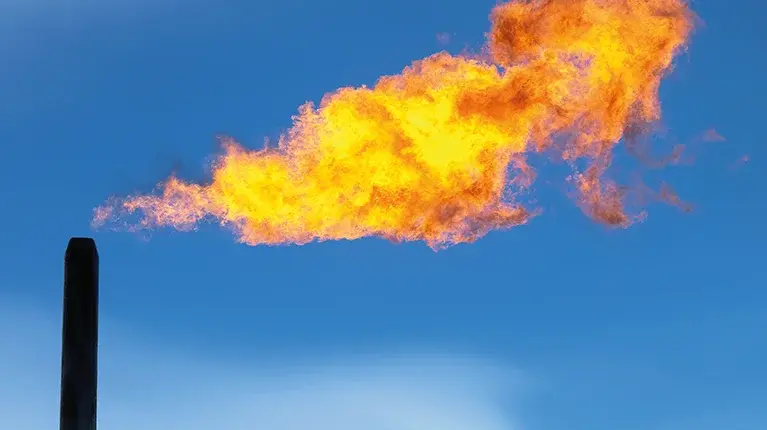
During oil production, refining, and processing, facilities release harmful gases into the atmosphere. These gases, which include hydrocarbons like methane, ethane, propane, and volatile organic compounds (VOCs), are either vented into the atmosphere (vent gases) or burned off in a flare stack (flare gas). Flaring is used as a safety measure to prevent the buildup of gas pressure in equipment and to safely dispose of gases that would otherwise be harmful or difficult to handle.

When burning the gas, it reacts with oxygen in the air, forming carbon dioxide and water vapor. Even though it is a greenhouse gas, carbon dioxide is less toxic than the original hydrocarbons. However, this carbon dioxide and venting gases still contribute to environmental pollution. Moreover, some hydrocarbons, such as methane and propane, are highly valuable, for example as energy sources. Vent or flare gas recovery systems are used to ensure that none of these hydrocarbons are released into the atmosphere. They are designed to capture all the harmful gases efficiently while also allowing the recycling of valuable hydrocarbons.

Vacuum pumps play a key role by extracting vent or flare gases from tanks, pipelines, and process equipment. They generate vacuum inside the recovery system. Since gases naturally move from areas of higher pressure to areas of lower pressure, the vent gases are suctioned into the system. This process captures hydrocarbons as well as carbon dioxide, protects equipment from damage, and prevents unintended gas releases.

Compressors work alongside vacuum pumps to handle the captured gases. Once collected, they increase the pressure of the gas by reducing its volume, thereby making it denser. This process allows more gas to fit into the available space in a tank, facilitating the gas storage and transportation for further use, processing, or safe disposal.

Matching products

What is the difference between vent gas recovery and vapor recovery?

To understand the difference, it is important to know what vent gases and vapors are. Vent gases are gases that are intentionally released during operations in the oil and gas industry, such as pressure relief, equipment depressurization, or gas venting during maintenance. These gases are typically mixtures of hydrocarbons, which result from production, processing, or transport activities. Vapors, on the other hand, are lighter hydrocarbon gases that naturally form above liquid products, like crude oil or refined chemicals, that are stored in tanks. These vapors are produced when the liquids evaporate due to temperature changes or agitation during filling or emptying.

Vent gas and vapor recovery both use vacuum technology tocapture gases released from equipment or vapor from storage tanks. Vacuum pumps generate vacuum inside the recovery system. Since gases move from areas of higher pressure to areas of lower pressure, vent and flare gases are suctioned into the system. This is done to prevent environmental harm by releasing polluting hydrocarbons into the atmosphere and to recycle valuable hydrocarbons. An example for this system can be found in fuel stations. Here, vapors that form above the fuel in the tanks are captured before they can be released into the atmosphere.

What is the difference between monoethylene glycol (MEG) and triethylene glycol (TEG)?

The pipelines that transport the extracted gas to shore are located in deep-sea environments. This means that they are exposed to temperatures near freezing and very high pressures. These conditions create the perfect environment for gas hydrates: ice-like solids that form when water or water vapor reacts with natural gas molecules. Over time, these crystals grow and eventually form blockages that restrict or completely stop the flow of gas. This can result in reduced production or equipment damage. To prevent hydrate formation and maintain gas purity, the industry uses chemical inhibitors such as monoethylene glycol (MEG) and triethylene glycol (TEG).

MEG is injected directly into the gas stream at key points, such as wellheads. It prevents the formation of gas hydrates by lowering the freezing point of water present in the wet extracted gas. TEG is then used to further reduce the water content of the gas even, ensuring the gas is sufficiently dry for transportation or processing. After fulfilling their roles, MEG and TEG become rich in water and contaminants, including salts, hydrocarbons, and particles from pipeline surfaces. To maintain their effectiveness, the glycols are recovered, purified, and reused.

How is crude oil distilled?

Crude oil is a mix of various liquid hydrocarbons. It is extracted from the ground and has to be further processed to gain useful products like diesel fuel, heating oil or naphtha. To do so, the oil is broken down into its components in a process called distillation.

Crude oil distillation takes place in refineries. To maintain the quality of the oil the temperature in the process must stay below a certain point. To achieve this, vacuum pumps are used. They lower the boiling points of liquids, ensuring crude oil separation at low temperatures. These lower process temperatures help lower operational costs, minimize the risk of thermal damage to the crude oil, and reduce emissions. The process consists of two separate steps: atmospheric distillation and vacuum distillation.

In the first step, atmospheric distillation, crude oil is heated to about 370 °C at atmospheric pressure, causing it to evaporate. The oil vapor enters a fractionating column. This column, which is hotter at the bottom and cooler at the top, contains fractional trays. These are perforated platforms that are equipped with bubble caps and help to separate the crude oil fractions. As the oil vapor rises through the column, it has to pass through these platforms on its way, causing it to cool down and recondense. Since each fraction has its unique boiling point, it recondenses at different levels, where it can be drawn off. Through this process, the fractions separate from each other. Above 400 °C, fractions with lower boiling points start to degrade, or “crack.” The temperature is therefore capped. The hydrocarbons with higher boiling points remain in a residual mixture, known as atmospheric residue.

To further separate this residue, it is distilled a second time in a vacuum distillation column. Using vacuum lowers the boiling points of the liquids, facilitating the separation of hydrocarbons with boiling points near 500 °C. Again, the different fractions recondense at the different levels and are extracted.

What is the purpose of crude oil distillation?

Crude oil distillation is used to separate crude oil into its different components, or fractions, based on their boiling points. This process is used to produce essential fuels like gasoline, diesel, and jet fuel, as well as raw materials for petrochemical products, such as plastics and lubricants. Crude oil distillation is the first step in refining and ensures that each fraction can be further processed to meet specific industrial and consumer needs. The process takes place in refineries and consists of atmospheric as well as vacuum distillation. Vacuum helps to lower the boiling points of liquids. This makes sure that the oil types in the crude oil mixture can be separated at lower temperatures, which minimizes the danger of thermal degradation. See our application page to learn more about crude oil distillation.

When should I use a blower instead of a compressor in oil and gas applications?

Overpressure provided by blowers and compressors is used throughout the oil and gas industry for example for storing vent and flare gases or cleaning contaminated filters with backwash. While both a compressor and a blower create overpressure, they use different methods and give different results. A blower uses a slight increase in pressure to push gas or air in a certain direction. A compressor raises the pressure of the gas or air by compressing it into a small space, increasing its pressure and making it denser before discharging it. Compressors are used in applications requiring higher pressure levels.

As a result of the differing methods, one technology can be more suitable for a particular process in the oil and gas industry than the other. Contact us to discuss which overpressure solution is the right one for your application.

What is pipeline drying?

Pipelines transport crude oil, natural gas, and refined products, but moisture buildup can lead to corrosion, leaks, and product quality issues. Vacuum pumps help prevent this by accelerating the drying process, lowering the boiling point of water to ensure thorough moisture removal. Installed at key access points, vacuum pumps enable efficient drying with minimal disruption, reducing downtime and maintenance costs. Their energy efficiency also makes them an environmentally friendly alternative to traditional drying methods.

COBRA dry screw vacuum pumps from Busch Vacuum Solutions are ideal for demanding drying applications. Their corrosion-resistant design, with even temperature distribution over the whole pump body, prevents condensation and ensures optimal performance.

Why is vacuum essential for pipeline drying?

Pipelines are essential in the oil and gas industry for the transportation of crude oil, natural gas, or refined products such as gasoline over long distances. Maintaining the integrity and functionality of pipelines is crucial to ensure smooth, uninterrupted operations. One of the key challenges in pipeline maintenance is the presence of moisture. It can accumulate inside pipelines, for example, due to condensation of water vapor contained in the transported gas. If left untreated, moisture can cause problems, such as corrosion of the pipeline. This weakens the structure and leads to potential leaks or failures. It can also impair the quality of the transported product, which in turn can affect refining processes and reduce the quality of the final product.

Vacuum technology can help to accelerate the drying process, making it more efficient. To achieve this, vacuum pumps are typically installed at designated access points along the pipeline, such as at maintenance stations or terminal facilities. During maintenance, they generate vacuum inside the pipelines. Vacuum lowers the boiling point of water which helps the fast and thorough evaporation of any residual moisture. As the moisture evaporates, the vacuum pump extracts the water vapor, which is condensed back into liquid form and removed from the system. This method ensures the pipelines remain dry and protected from corrosion.

Using vacuum pumps for the drying process has several advantages over traditional methods like air-drying. Most importantly, the lowered boiling point of water significantly accelerates the drying process, allowing pipelines to be brought back into operation more quickly. Since vacuum pumps can be integrated into existing pipeline systems with minimal disruption to ongoing operations, they offer a practical solution for drying pipelines without extensive downtime. Their energy-efficient operation helps to save costs and makes them the environmentally friendly choice compared to traditional drying systems.

How does vacuum speed up filtration in the oil and gas industry?

In the oil and gas industry, filtration is critical to ensure that fluids like crude oil and gases are clean and free from impurities. Crude oil, for example, is filtered to erase contaminants that could foul the distillation columns and harm the refining process. Contaminants such as sand, rust, and sludge can damage sensitive equipment, disrupt processes, and lead to costly downtime. Filtration is essential for maintaining operational efficiency, ensuring safety, and protecting valuable infrastructure.

In the filtration process, using a filter at atmospheric pressure would lead to long processing times. In this case, gravity is the primary force driving the fluid through the filter media. Atmospheric filtration relies on the natural weight of the liquid to pass through, which can lead to slower processing times, especially for viscous fluids or when dealing with fine particles. By contrast, vacuum can speed up this process considerably: Through controlled suction, vacuum pumps draw fluids through the filter media like a cotton cloth with precision, ensuring that even fine particles are effectively removed. This method significantly improves the quality of filtered products while accelerating the filtration process. Several filter types can be used in different processes.

With vacuum-assisted filtration, operators of oil and gas plants can ensure their products meet the high standards required for critical applications, safeguarding equipment, improving process reliability, and complying with strict environmental regulations.

How does vacuum technology contribute to sustainability in oil and gas operations?

Vacuum technology plays a vital role in oil and gas operations by reducing their environmental impact, improving energy efficiency, and minimizing waste. One of the key benefits of vacuum pumps is their ability to lower energy consumption. By operating under vacuum, processes such as distillation or drying can be carried out at lower temperatures. This not only reduces energy demand but also decreases the overall carbon footprint of the operation. The lower temperatures also minimize the risk of degrading the final product, which enhances product quality.

Vacuum systems are also instrumental in cutting emissions by capturing and recovering gases that would otherwise be vented into the atmosphere. In applications like vent gas recovery, vacuum technology helps prevent the release of greenhouse gases and other pollutants. This contributes to cleaner air and a healthier environment. In addition, vacuum technology enhances resource optimization by enabling the recovery and reuse of valuable resources, such as glycols used in moisture inhibitors in gas production. This minimizes waste and ensures resources are used to their fullest potential.

How do I select the right vacuum solution for my application?

Several factors have to be considered when selecting the right vacuum solution. These factors vary depending on the application and the specific needs of your process.

Use our product finder to find your ideal vacuum pump. Or contact us to find out which vacuum solution fits your needs best. Our Busch experts are happy to help!