
Maintenance is often seen primarily as a way to prevent breakdowns in vacuum systems. While this is true, its role in preserving their efficiency is just as critical. Components such as seals, bearings, filters and oil can all compromise efficiency if they are worn or degraded. This not only wastes energy but also accelerates wear, increases heat, and shortens the service life of the vacuum pumps.
The challenge is that efficiency loss is gradual, may not be obvious, and so is easy to overlook. This article explores how high-quality, proactive maintenance safeguards vacuum pump efficiency and prevents the hidden costs that neglect inevitably brings.

Correct torque ensures proper sealing and alignment. Source: Busch Group.
How Maintenance Sustains Vacuum Pump Efficiency
Why maintenance protects efficiency
Vacuum pump efficiency must be actively preserved. Without routine servicing, even the most advanced vacuum pumps begin losing performance. Over time, normal wear, oil degradation, and the gradual build-up of process residues can increase internal friction or alter clearances, reducing performance if left unchecked. Maintenance restores the vacuum pump to its designed operating condition, ensuring it runs as efficiently as intended.When care is delayed until problems become apparent, efficiency has already eroded. Small inefficiencies quietly build up, compounding into higher energy bills, greater wear, and unplanned downtime. Some of the most common consequences of neglected maintenance include:
- Energy efficiency loss: A pump with degraded oil, worn bearings, or leaking seals needs more energy to deliver the same output. Even small efficiency losses multiply significantly over months of operation.
- Increased risk of downtime: Clogged filters, fouled cooling systems, or worn bearings can cause sudden failures, leading to unplanned downtime that disrupts production.
- Reduced lifespan: Worn bearings, blocked filters, or oil left beyond its intended service life accelerate wear throughout the pump by raising internal temperatures. This can shorten the lifetime of other components such as vanes and seals, and in some cases cause the vacuum pump to become stuck.
The hidden costs of inefficiency, downtime, and accelerated wear far outweigh the perceived savings of delaying or reducing maintenance.
Why maintenance quality matters
Vacuum pumps are precision machines, and deviations from OEM (original equipment manufacturer) service and repair procedures can reduce efficiency. Differences in performance may not be immediately obvious, but they can add up to a significant sum over time. For example, incorrect reassembly tolerances directly affect volumetric efficiency. A misaligned rotor or incorrectly assembled housing can increase pumping losses, cause vibrations, or even lead to seizure.The choice of spare parts and consumables is equally important. The wrong grade of oil can compromise lubrication, sealing and cooling, increasing power consumption and internal wear. Non-genuine exhaust filters may cause increased back pressure, reducing pumping efficiency and increasing internal temperatures. Non-genuine parts may look similar to original components, but they rarely match the exact material properties or dimensional tolerances that are required to preserve efficiency. Over time, these substitutions raise operating costs and shorten the vacuum pump’s lifetime.
This is why servicing by trained technicians and using genuine parts is essential to maintaining peak efficiency. The technicians ensure that every service restores the vacuum pump to its intended performance rather than introducing inefficiencies. Beyond the pump itself, their experience enables them to detect inefficiencies and potential failure points not only within the pump, but also in upstream and downstream components and the wider system configuration. They also support defining optimal service intervals, balancing equipment health with cost efficiency to avoid both premature maintenance and performance degradation.
-
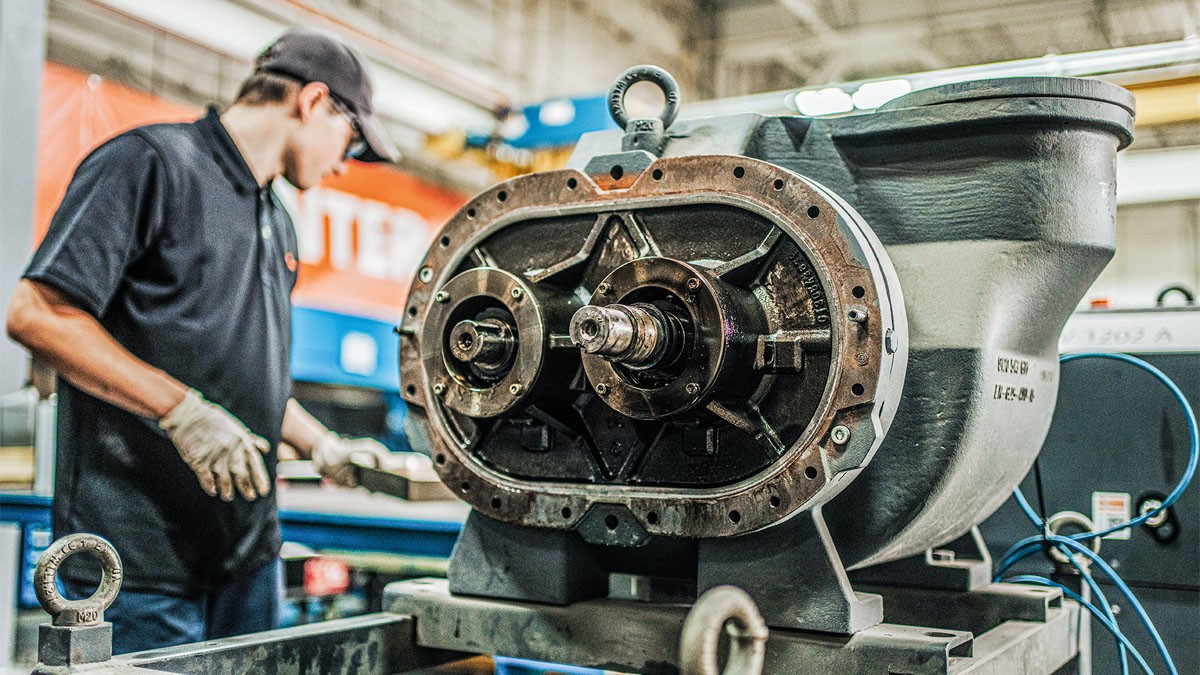
Opening the pump allows worn components and seals to be renewed.Source: Busch Group.

-
test
Opening the pump allows worn components and seals to be renewed.Source: Busch Group.
Building a proactive maintenance strategy
Preserving vacuum pump efficiency is most effective when maintenance is proactive rather than reactive. A structured approach not only avoids costly failures, but it also prevents small inefficiencies from compounding and keeps the vacuum pump operating close to its original performance.Key elements of a proactive maintenance strategy include:
- Follow stated service intervals
Every pump component has a designed service life. Oil, seals, bearings, and filters usually degrade at predictable rates, measured in operating hours. Replacing these parts before their efficiency drops ensures the vacuum pump continues to operate at peak performance. - Keep detailed service records
Maintenance logs create a valuable history of pump health, recording running hours, replaced parts, and performance measurements. Over time, these records reveal trends such as slower pump-down times or rising power consumption, allowing operators to adjust service schedules before issues escalate. - Train operators in early detection
Operators are the first line of defense against efficiency loss. Subtle changes in noise, vibration, oil color, or vacuum levels are often early indicators of wear. Training staff to recognize and report these signs ensures corrective action is taken before inefficiencies turn into breakdowns. - Adopt IoT-based monitoring
Modern condition monitoring systems, such as OO – Digital Services, track real-time parameters like power consumption, vibration, and vacuum levels. These insights allow predictive maintenance and optimization of service schedules. This prevents both under-maintenance, which risks failure, and over-maintenance, which wastes resources. Early alerts also ensure efficiency losses are addressed before they become costly. - Consider service contracts
A comprehensive service contract brings these elements together under expert management. Trained technicians use genuine parts and correct procedures to keep vacuum pumps running at optimal efficiency. By outsourcing maintenance in this way, operators benefit from predictable costs, reduced risk, and maximum energy efficiency across their vacuum systems.
Summary
Vacuum pump efficiency is not sustained without maintenance. Efficiency is the result of both precise engineering and consistent care throughout the pump’s lifetime. Skipping or delaying maintenance may not cause an immediate failure, but it sets in motion a slow decline in performance, reliability, and efficiency.A well-designed vacuum pump can only deliver its full potential when maintained to the standards it was built for. The true cost of neglect is not just in repairs, but also in wasted energy, lost productivity, and shortened service life.
By committing to proactive, high-quality maintenance, operators protect more than just their equipment. They help to safeguard efficiency, reliability, and profitability across the entire production process.