
Selon les chiffres du Centre aérospatial allemand, plus de 36 millions de vols ont décollé en 2024, ce qui fait du trafic aérien le responsable d'environ 2,1 % des émissions mondiales de CO2. Cela équivaut à peu près aux émissions annuelles totales d’un pays comme l’Allemagne. Pour réduire l’impact climatique de l’aviation et rendre les voyages aériens nettement plus écologiques à l’avenir, de nouvelles technologies sont nécessaires. Les solutions de vide de Busch sont utilisées pour mener des recherches dans ce domaine.
Un rapport de l’Office of Technology Assessment du Bundestag allemand (TAB) identifie les carburants durables comme le domaine le plus important pour l’innovation à court terme, car la consommation de carburant est le principal facteur de l’impact climatique de l’aviation.
L’hydrogène, en particulier, offre un grand potentiel en tant que carburant propre pour l’aviation. Le rapport du TAB souligne toutefois que le stockage de l’hydrogène à bord des avions pose des défis techniques, car il nécessite de grands réservoirs isolés à une température de −253 °C, ce qui augmente considérablement le poids de l’appareil. Surmonter ces obstacles exigera des recherches continues et des avancées technologiques concernant les avions et les infrastructures actuels.
S'inscrivant dans cet esprit d'innovation, un groupe d'étudiants suisses, regroupés au sein de l'association Cellsius, a mis au point un petit avion fonctionnant exclusivement à l'hydrogène. Cellsius est une organisation à but non lucratif fondée en 2022 et dédiée à la recherche sur l'aviation durable. Les étudiants de l'ETH Zurich peuvent consacrer la dernière année de leur programme de bachelier à mettre en pratique, sur un exemple concret d'avion réel, les connaissances d'ingénierie acquises en théorie.
Au cours de cette période, ils ont mis au point le H2-Sling, un avion fonctionnant à l’hydrogène sous forme gazeuse. La recirculation efficace de l’hydrogène est rendue possible par un surpresseur de recirculation MINK MH fourni par Busch Solutions de Vide à l’ETH Zurich afin de soutenir ce projet de recherche et de favoriser les avancées technologiques.

Le H2-Sling, premier avion à hydrogène de Suisse, mis au point par Cellsius à l’ETH Zurich. Source : Cellsius
Un surpresseur de recirculation de Busch Solutions de Vide équipe le premier avion à hydrogène suisse
Cellsius
Le premier avion à hydrogène de Suisse
L’avion lui-même est propulsé par un système de pile à combustible de 100 kilowatts. Dans une pile à combustible, une réaction électrochimique entre l’hydrogène et l’oxygène libère de l’électricité et de la chaleur. La pile se compose de deux électrodes séparées par une membrane électrolytique : une anode et une cathode. La membrane assure le transport des ions.L’hydrogène pénètre du côté de l'anode. Les molécules d’hydrogène sont dissociées en protons et en électrons. Les protons d'hydrogène se diffusent à travers la membrane vers la cathode, où ils réagissent avec l'oxygène de l'air ambiant pour former de l'eau et libérer de l'énergie. Cette énergie est utilisée par le moteur électrique pour entraîner l’hélice de l’avion.
-
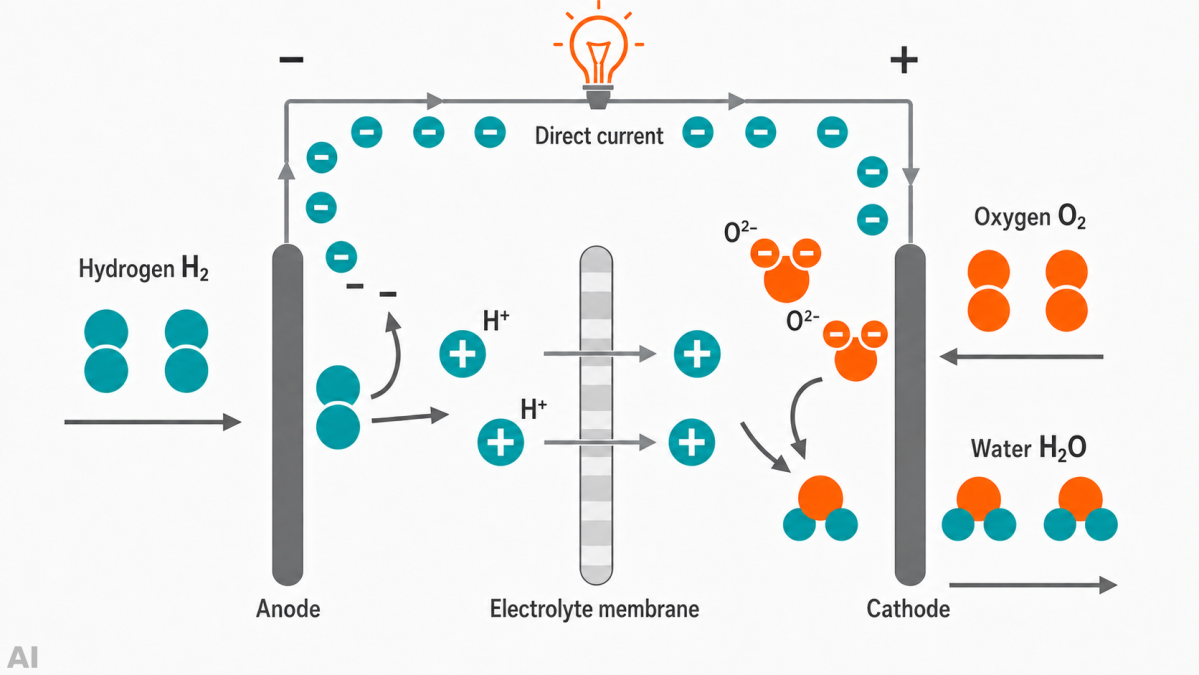
Une pile à combustible se compose de deux électrodes séparées par une membrane électrolytique : une anode et une cathode. La membrane assure le transport des ions. Source : Busch Solutions de Vide/Généré par l’IA.

-
test
Une pile à combustible se compose de deux électrodes séparées par une membrane électrolytique : une anode et une cathode. La membrane assure le transport des ions. Source : Busch Solutions de Vide/Généré par l’IA.
L'eau étant le seul sous-produit de la réaction, aucun gaz à effet de serre nuisible au climat n'est émis dans l'atmosphère pendant le vol. L’hydrogène est stocké dans deux réservoirs situés sous les ailes de l’avion, contenant chacun 2,6 kg. Grâce à la forte densité énergétique de l'hydrogène, l'appareil est capable de parcourir 200 kilomètres, ce qui correspond à environ deux heures de vol. Le dévoilement et la première présentation publique de l’avion ont eu lieu en octobre 2025. L’appareil attend désormais la certification de l’Office fédéral de l’aviation civile en Suisse afin que le premier vol d’essai puisse avoir lieu au printemps 2026. L’objectif ultime : un vol au-dessus des Alpes.
Voici comment cela fonctionne : l’hydrogène provient des réservoirs haute pression situés sous les ailes. Pour garantir une réaction chimique stable dans la pile à combustible, la quantité d’hydrogène fournie est supérieure aux besoins réels. Cela permet d’éviter une « privation » locale de réactif, un phénomène qui se produit lorsqu’il n’y a pas suffisamment de réactif dans la pile et qui entraîne finalement l’arrêt de la réaction.
En raison de cet excédent d’apport, il reste de l’hydrogène une fois la réaction terminée. Ne pas utiliser ce surplus impliquerait de recourir à des réservoirs encore plus volumineux pour transporter l’hydrogène nécessaire au maintien de la réaction, ce qui alourdirait l’avion et réduirait ses performances. Afin d’optimiser la durée de vol et l’autonomie, l’hydrogène inutilisé doit donc être remis en circulation.
Le MINK MH est un surpresseur de recirculation certifié TÜV spécialement développé pour une utilisation dans les piles à combustible. « Busch est l’un des rares fournisseurs à proposer des solutions pour les piles à combustible à hydrogène. Nous avons déjà eu de très bonnes expériences avec la version plus petite du MINK MH, que nous avons installée dans un circuit d’essai », explique Andres Neff, responsable technique du projet H2-Sling. « Tout a parfaitement fonctionné dans le système d’essai, et le surpresseur est très facile à utiliser. Nous étions donc très heureux de pouvoir utiliser la version plus grande de ce surpresseur pour notre projet ».
Le modèle MINK MH de Busch garantit une recirculation efficace
Pour que la pile à combustible fonctionne de manière fiable, l’alimentation en hydrogène et en air doit être soigneusement contrôlée afin d’entretenir la réaction chimique. Le surpresseur de recirculation MINK MH de Busch garantit que l’hydrogène n’ayant pas réagi n’est pas gaspillé, mais réutilisé efficacement.Voici comment cela fonctionne : l’hydrogène provient des réservoirs haute pression situés sous les ailes. Pour garantir une réaction chimique stable dans la pile à combustible, la quantité d’hydrogène fournie est supérieure aux besoins réels. Cela permet d’éviter une « privation » locale de réactif, un phénomène qui se produit lorsqu’il n’y a pas suffisamment de réactif dans la pile et qui entraîne finalement l’arrêt de la réaction.
En raison de cet excédent d’apport, il reste de l’hydrogène une fois la réaction terminée. Ne pas utiliser ce surplus impliquerait de recourir à des réservoirs encore plus volumineux pour transporter l’hydrogène nécessaire au maintien de la réaction, ce qui alourdirait l’avion et réduirait ses performances. Afin d’optimiser la durée de vol et l’autonomie, l’hydrogène inutilisé doit donc être remis en circulation.
Surpresseur de recirculation spécialement conçu pour les piles à combustible
Pour ce faire, le réactif doit être renvoyé de la sortie d’anode de la pile à combustible vers son entrée. C’est là qu’intervient le MINK MH de Busch : deux rotors à bec tournent en sens inverse à l’intérieur du boîtier du compresseur. Grâce à la rotation de ces rotors à bec, l’hydrogène est aspiré à l’intérieur, comprimé, puis renvoyé vers l’anode de la pile à combustible, où il se mélange à l’hydrogène frais provenant du réservoir. De cette manière, le cycle de réaction peut se poursuivre sans interruption. La réutilisation de l’hydrogène n’ayant pas réagi permet de réduire la consommation de carburant au minimum et d’économiser des ressources.Le MINK MH est un surpresseur de recirculation certifié TÜV spécialement développé pour une utilisation dans les piles à combustible. « Busch est l’un des rares fournisseurs à proposer des solutions pour les piles à combustible à hydrogène. Nous avons déjà eu de très bonnes expériences avec la version plus petite du MINK MH, que nous avons installée dans un circuit d’essai », explique Andres Neff, responsable technique du projet H2-Sling. « Tout a parfaitement fonctionné dans le système d’essai, et le surpresseur est très facile à utiliser. Nous étions donc très heureux de pouvoir utiliser la version plus grande de ce surpresseur pour notre projet ».