
How IoT Remote Condition Monitoring Helps Optimize Efficiency
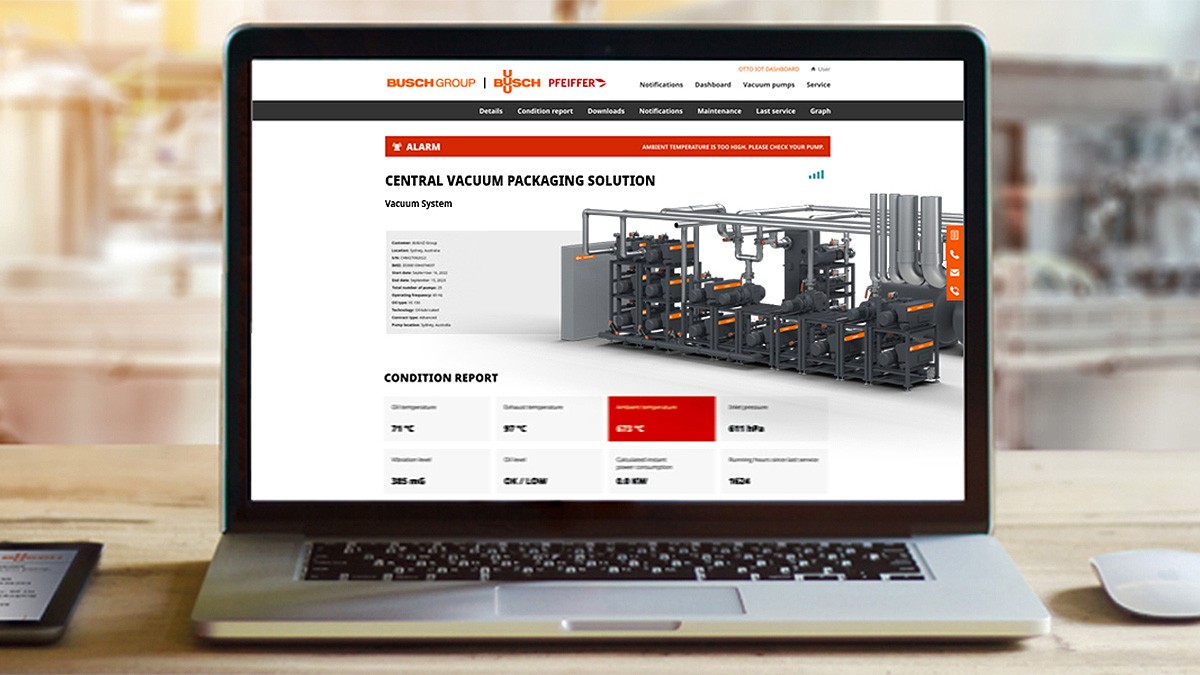
“You cannot improve what you do not measure” is a familiar phrase in business. The same can be said of the health, performance and efficiency of vacuum pumps and systems. This is where IoT (internet of things) remote condition monitoring can help. These monitoring systems use sensors to measure vibration, temperature, pressure, and other critical parameters. This data is then sent securely to the cloud for interpretation and analysis, where it is used to give early indications of developing issues.
How IoT remote condition monitoring adds value
IoT remote condition monitoring systems track the health and performance of vacuum systems and send alerts if an issue is identified. For example, high vibration levels could be detected, potentially indicating bearing wear. The alert would enable timely intervention by replacing the worn bearings, preventing bearing failure, and avoiding costly damage to larger components such as rotors or end plates. Although this is the core benefit of IoT remote condition monitoring, there are several other ways that it can add value, such as:- Detecting wear or oil degradation early to avoid costly failures and unplanned downtime
- Supporting the optimization of service schedules to ensure vacuum pumps are not being serviced more or less than they need to be
- Tracking energy usage in real time to identify inefficiencies
- Monitoring process stability by identifying irregularities in system pressure or flow that could impact product quality or process consistency
- Enabling remote monitoring of multiple vacuum pumps and systems across locations via a central dashboard
- Allowing performance benchmarking between vacuum pumps, systems or sites to uncover best practices and efficiency gaps
- Transforming raw data into insights, uncovering opportunities for process improvements and system upgrades.
By continuously measuring key operating parameters, IoT remote condition monitoring provides the data needed to make informed, timely decisions. The following key areas show how these insights translate into efficiency improvements.

-
test
Predictive maintenance vs traditional maintenance
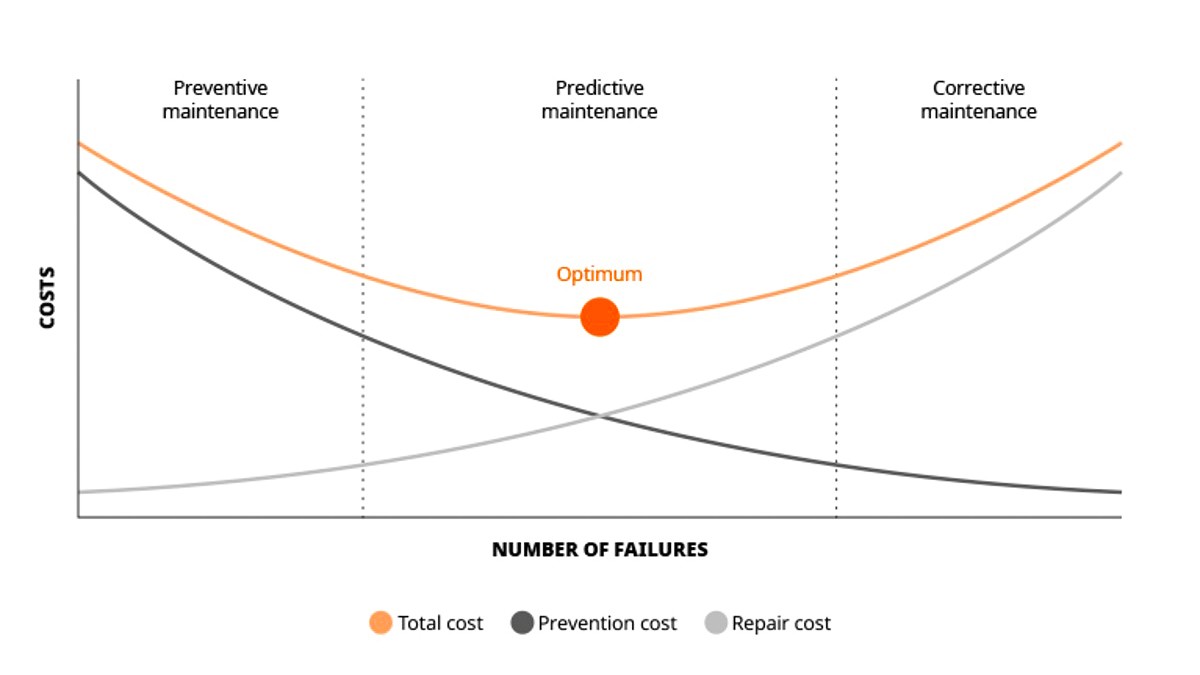
Traditional maintenance often relies on fixed service schedules, known as preventive maintenance, or reacting to breakdowns once they happen, known as corrective or reactive maintenance. Both approaches can lead to unnecessary costs, unplanned downtime, and missed early signs of wear. By moving away from rigid maintenance schedules, predictive maintenance enables servicing based on the actual condition of equipment, rather than fixed time intervals. In predictive maintenance, the optimal service point is calculated by analyzing equipment performance data and identifying trends that indicate when maintenance will be most effective. IoT-based remote condition monitoring is a key enabler of this approach, providing continuous insight into operating parameters such as pressure, temperature, and vibration. This prevents premature servicing whilst avoiding the risk of late intervention, therefore reducing unplanned downtime and maintenance costs.Energy efficiency with real-time data
Consumed energy is often the largest expense associated with the total cost-of-ownership of any vacuum pump, yet it is often not monitored. IoT-enabled remote monitoring records power use, operating hours, and vacuum performance data, helping to highlight inefficiencies that would otherwise go unnoticed, such as:- Oversized vacuum pumps consuming excess energy
- Vacuum pumps running unnecessarily during idle periods.
- Systems operating outside their optimal pressure range.
- Vacuum pumps operating too often or for longer than anticipated due to leaks.
- Incorrect duty setpoints causing vacuum pumps to overwork.
Armed with these insights, energy use can be intelligently optimized. Operators can refine control strategies, repair leaks, or make upgrades to reduce energy consumption and carbon emissions.
Remote monitoring and faster responses
One of the crucial benefits of IoT-based remote vacuum system monitoring is the ability to oversee operations remotely via a dashboard on a computer or portable device. These centralized dashboards give maintenance teams a real-time overview. Alerts for pressure changes, vibration spikes, or high temperatures enable quick intervention. This also reduces manual inspections and speeds up troubleshooting. With OO – Digital Services, the IoT remote condition monitoring system from Busch, service technicians are also notified of any alerts and will contact operators to make a service appointment.
-
test